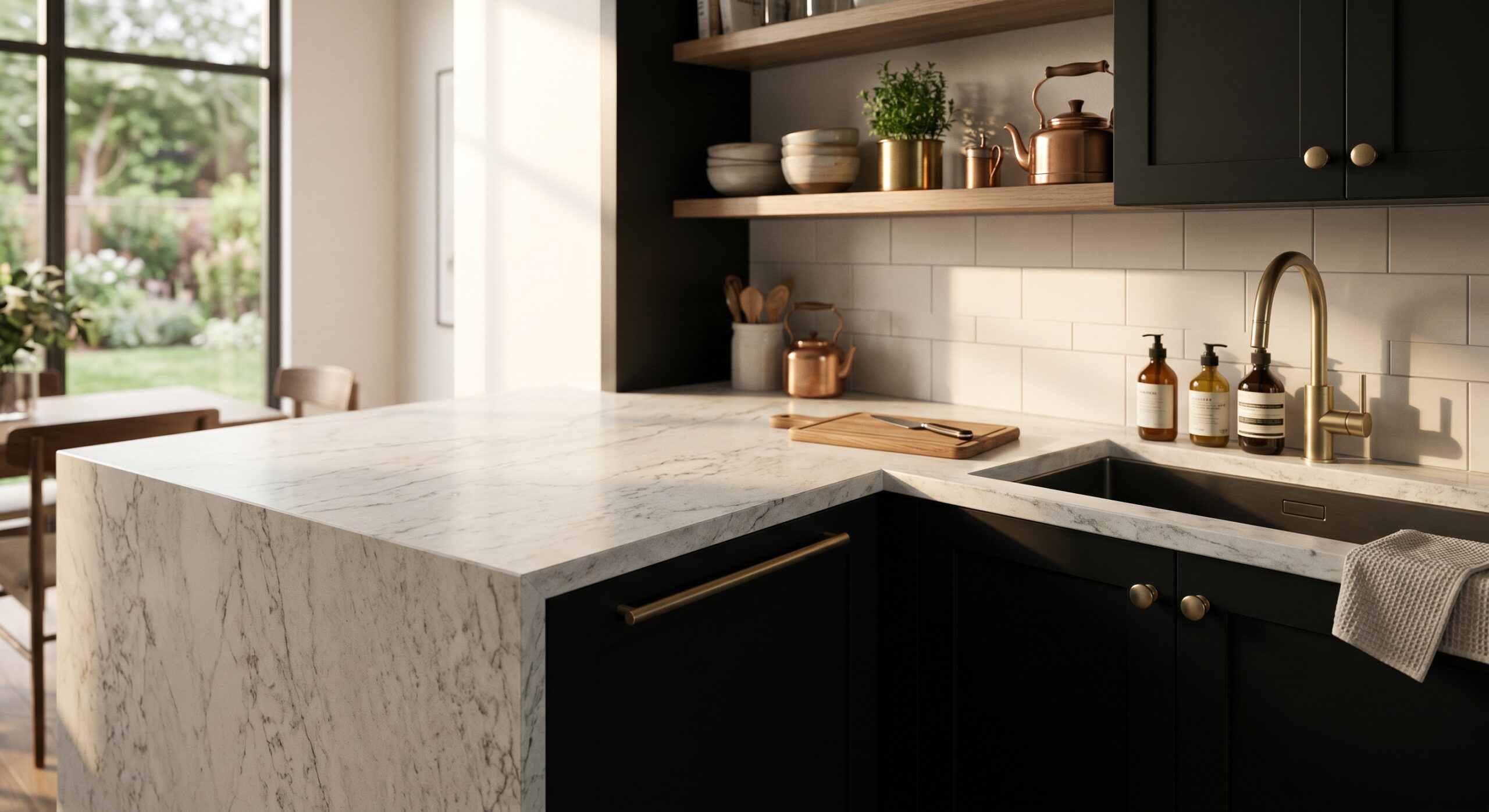
A modern kitchen doesn’t need a major renovation to look expensive. With the right changes, homeowners can create a high-end look for under $500—often in a single weekend. This guide shows which updates deliver the biggest visual impact without the premium cost, focusing on materials, lighting, and design tricks that professionals use to create luxury spaces on a budget.
A 2025 Houzz kitchen remodeling report found that 68% of homeowners who renovated on a budget prioritized upgrades that improved both function and visual appeal. The three most cost-effective improvements were cabinet refreshes, lighting updates, and hardware replacements—all of which can transform a kitchen’s entire look without replacing major elements.
Good affordable kitchen upgrades balance durability with design. For example, quartz countertop overlays start at $150 and mimic the look of solid stone, while matte black cabinetry paired with brass hardware creates an instant high-end contrast. These changes increase a home’s resale value by up to 3% according to the National Association of Realtors’ 2026 Cost vs. Value Report.
At a Glance
Quick Wins for an Expensive Look:
- Cabinet facelifts with paint or refacing ($200–$400)
- Statement lighting with LED or pendant fixtures ($100–$300)
- Hardware swaps with designer-grade pulls and knobs ($50–$150)
- Countertop overlays to mimic stone ($150–$400)
- Open shelving with curated displays ($100–$300)
- Backsplash updates with peel-and-stick tiles ($50–$200)
- Faucet upgrades to bridge or pull-down styles ($150–$300)
Time Investment: Most projects take under 48 hours. Cabinet painting and backsplash installations can be completed in a single weekend.
ROI: These upgrades recoup 70–85% of their cost at resale, making them better investments than cosmetic changes like wallpaper or accent walls.
Why These Upgrades Work: The Basics of High-End Design
Luxury kitchens rely on three key principles: consistency, contrast, and purpose. Consistency comes from matching materials and finishes, contrast creates visual interest through varied textures, and purpose ensures each element has a clear role. Affordable upgrades copy these principles by focusing on focal points and removing visual clutter.
A 2025 study by the American Institute of Architecture Students found that kitchens with three or fewer visible materials—like painted cabinets, quartz counters, and a single backsplash material—appear more expensive than those with mixed finishes. For example, a monochromatic kitchen with matte black cabinets and white quartz counters looks pricier than one with stained wood, white cabinets, and a mosaic backsplash, even when both cost the same to install.
Contrast is equally important. A matte black range hood against white cabinets creates a focal point, while brass hardware against dark wood adds warmth. These intentional contrasts make a kitchen feel curated rather than random, a key feature of high-end design.
How to Choose Your Kitchen Upgrades
Not all upgrades provide equal returns. To maximize impact, address your kitchen’s biggest visual flaws first. Use this simple approach:
1. Assess Your Kitchen’s Current State: Take photos and note what feels outdated. Common issues include worn cabinetry, outdated fixtures, or poor lighting.
2. Decide on Your Style: Do you want a modern, transitional, or traditional look? Modern kitchens use clean lines and minimal hardware, while traditional spaces favor ornate details and warmer tones. Transitional styles blend both for a timeless appeal.
3. Set Your Budget: Divide your $500 target into thirds: 50% for major focal points (cabinets, countertops), 30% for functional upgrades (lighting, faucets), and 20% for finishing touches (hardware, decor). This ensures the most visible changes get the most attention.
4. Plan for Longevity: Avoid trends that date quickly, like bold colors or overly ornate styles. Instead, choose neutral base colors and classic hardware shapes that adapt to changing tastes.
5. DIY vs. Professional Help: Some projects, like painting cabinets or installing peel-and-stick backsplashes, are beginner-friendly. Others, like lighting fixture replacements or countertop overlays, may require professional installation for safety and precision.
For example, a homeowner in Seattle spent $420 updating her 1980s kitchen with matte black cabinet paint, quartz countertop overlays, and matte black pendant lights. The result looked like a $50,000 remodel, according to her real estate agent.
Updating Cabinets: Paint, Replace, or Refacing?
Cabinets account for 30–40% of a kitchen’s visual impact, so they’re the most influential upgrade. Three cost-effective approaches deliver high-end results:
Option 1: Paint Cabinets for a Custom Look ($200–$400)
Painting cabinets is the most budget-friendly way to modernize a kitchen. A gallon of high-quality cabinet paint costs $60–$100 and covers 400 square feet. For a 10×10 kitchen, that’s enough for two coats.
For a durable finish, sand cabinets lightly to remove gloss, apply a bonding primer, and use a high-adhesion paint. Matte and eggshell finishes hide imperfections better than glossy ones. Dark colors like Sherwin-Williams’ “Iron Ore” add sophistication without overpowering.
Tip: Remove doors and drawers before painting to ensure even coverage. Label hardware locations to simplify reassembly.
Option 2: Replace Doors and Drawer Fronts ($300–$600)
If your cabinet boxes are in good condition but the doors look dated, replacing just the doors and fronts can save hundreds. IKEA’s SEKTION system offers customizable fronts starting at $15 per door, while local cabinet shops often provide semi-custom options for $50–$100 per door. Pair white Shaker-style doors with a contrasting island in a dark hue for a high-end look.
For a transitional style, opt for slab doors with subtle grooves. Avoid overly ornate designs, which can feel dated in five years.
Option 3: Cabinet Refacing ($500–$1,200)
Refacing involves replacing doors, drawers, and veneering the cabinet boxes. This option costs more than painting but delivers a seamless, high-end appearance. Companies like Refacet and Cabinet Now offer refacing services for $8–$15 per linear foot. The result mimics custom cabinetry at a fraction of the cost.
Refacing is ideal for homeowners who want a flawless finish without the mess of painting. However, it requires professional installation, so factor in labor costs.
Case Study: A couple in Austin spent $580 refacing their oak cabinets with white Shaker doors and a matte black island. Their real estate agent noted that the update helped their home sell for 5% above asking price in a competitive market.
Countertop Overlays: Simple Stone-Like Surfaces
Solid surface countertops start at $4,000 for a 10×10 kitchen, but overlays offer the same look for under $150 per linear foot. Companies like Granite Overlays and Quartz Overlays provide pre-cut sheets that adhere to existing counters, covering scratches, stains, and outdated materials.
Overlays come in quartz, granite, and marble patterns, with matte and honed finishes that hide fingerprints better than glossy surfaces. Installation takes 4–6 hours, and the adhesive bonds permanently, creating a seamless look.
Pros and Cons:
| Pros | Cons |
|---|---|
| Affordable alternative to full countertop replacement | Limited customization options (pre-cut sheets only) |
| Durable and heat-resistant | Not all overlays are reversible |
| Improves resale value | Professional installation required for best results |
| Wide range of colors and patterns | Can’t be installed over damaged or uneven surfaces |
Budget Tip: Look for remnant sales at local countertop shops. Many charge 30–50% off for leftover materials, reducing overlay costs to $100–$200 per linear foot.
Comparison:
- Quartz Overlays: $120–$250 per linear foot, non-porous, scratch-resistant
- Granite Overlays: $100–$200 per linear foot, heat-resistant, requires sealing
- Laminate Overlays: $50–$100 per linear foot, budget-friendly but less durable
Lighting Upgrades: How to Choose Statement Fixtures on a Budget
Lighting transforms a kitchen’s ambiance more than any other upgrade. The key is layering three types of lighting: ambient, task, and accent. Ambient lighting provides overall illumination, task lighting focuses on work areas, and accent lighting highlights architectural features or decor.
For a high-end look, invest in a single statement fixture (like a pendant or chandelier) and supplement with affordable LED strips or recessed lighting. According to the U.S. Department of Energy, LED lighting uses 75% less energy than incandescent bulbs and lasts 25 times longer, making it a cost-effective choice.
Pendant Lights: The Ultimate Focal Point ($100–$300)
Pendant lights draw the eye upward, creating a sense of height and luxury. For a modern kitchen, opt for matte black or brushed gold finishes with clear glass shades. Brands like Hunter Douglas and Rejuvenation offer stylish options under $200.
Tip: Hang pendants 30–36 inches above the countertop for optimal illumination. For an island, space pendants 24–30 inches apart.
Under-Cabinet LED Lighting: Functional and Stylish ($50–$150)
LED strips provide task lighting for food prep and highlight countertop surfaces. Look for waterproof, dimmable options like Lutron’s Diva LED Dimmer ($45). Install them under upper cabinets for a soft glow that enhances the kitchen’s warmth.
Recessed Lighting: A Clean, Modern Look ($200–$400)
Recessed lights create a seamless ceiling appearance while providing even illumination. For a budget-friendly option, choose Feit Electric’s 4-inch LED recessed lights ($25 each). Install 6–8 lights for a 10×10 kitchen, spacing them 4 feet apart.
Warning: Recessed lighting requires cutting into drywall, so hire an electrician if you’re not comfortable with electrical work.
Hardware Swaps: The Easiest Way to Elevate Your Kitchen
Hardware is the jewelry of a kitchen. Swapping outdated knobs and pulls for modern options instantly updates the space. For a high-end look, choose finishes that complement your cabinetry and appliances. Matte black, brushed gold, and unlacquered brass are timeless choices that pair well with both modern and traditional styles.
Tip: Shop at Wayfair or Build.com for bulk discounts. Sets of 10 knobs or pulls often cost 20–30% less per unit than individual purchases.
| Finish | Cost per Knob/Pull | Best For | Durability |
|---|---|---|---|
| Matte Black | $3–$8 | Modern and transitional kitchens | High (scratch-resistant) |
| Brushed Gold | $5–$12 | Traditional and farmhouse styles | Medium (may tarnish over time) |
| Unlacquered Brass | $8–$15 | Luxury and vintage-inspired kitchens | Low (requires polishing) |
| Satin Nickel | $2–$6 | Contemporary and industrial styles | High (resists fingerprints) |
Tip: Use a template to mark screw holes before drilling. Most knobs and pulls come with installation templates, but a piece of painter’s tape works in a pinch.
Case Study: A homeowner in Denver spent $95 replacing her kitchen’s brass knobs with matte black pulls from Anthropologie. Her real estate agent noted that the update made the kitchen feel “designer-quality” without a full remodel.
Backsplash Updates: Peel-and-Stick vs. Traditional Tile
A backsplash protects walls from splatters and adds personality to a kitchen. Traditional tile installations cost $15–$30 per square foot, but peel-and-stick options offer the same visual impact for $1–$5 per square foot. Brands like SmartTiles and Peel & Stick Backsplash provide realistic stone and subway tile patterns that resist moisture and heat.
Pros and Cons:
| Option | Pros | Cons | Cost |
|---|---|---|---|
| Peel-and-Stick | Easy DIY installation, removable, budget-friendly | Less durable, may peel over time, limited pattern options | |
| Traditional Tile | Durable, heat-resistant, wide variety of styles | Expensive, requires professional installation, grout maintenance |
Tip: Use peel-and-stick tiles for a temporary update, then invest in traditional tile when funds allow. To extend their lifespan, seal the edges with clear caulk.
Tip: Choose a backsplash that contrasts with your countertops. For example, white subway tile pairs beautifully with dark quartz counters, while a bold pattern adds drama to a neutral kitchen.
The Unsung Hero of Kitchen Design: Faucet Upgrades
A high-quality faucet can elevate a kitchen’s entire aesthetic. Bridge faucets, pull-down sprayers, and touchless options are popular choices for modern kitchens. Brands like Moen, Delta, and Kohler offer stylish, functional faucets under $300.
Key Features to Look For:
- Pull-Down Sprayer: Ideal for cleaning dishes and filling pots. Look for a magnetic docking system for durability.
- Bridge Faucet: Adds a vintage-inspired touch with separate hot and cold handles. Pairs well with traditional and farmhouse styles.
- Touchless Faucet: Hygienic and modern, but costs $100–$200 more than standard options.
- High Arc Spout: Creates a sleek, professional look. Perfect for undermount sinks.
Tip: Measure your sink’s deck space before purchasing. Most faucets require 4–6 inches of clearance between the handles and spout.
Tip: Look for discontinued models or floor models at home improvement stores. Many retailers offer 30–50% off on display fixtures.
Comparison:
| Faucet Type | Price Range | Best For | Durability |
|---|---|---|---|
| Pull-Down Sprayer | $150–$300 | Modern and transitional kitchens | High (magnetic docking) |
| Bridge Faucet | $200–$400 | Traditional and farmhouse styles | Medium (separate handles may wear over time) |
| Touchless Faucet | $250–$500 | Contemporary and minimalist kitchens | High (battery-powered, but sensors may fail) |
Open Shelving: A Trendy Yet Timeless Upgrade
Open shelving creates a sense of space and allows homeowners to display curated dishware, glassware, and decor. For a high-end look, pair wooden shelves with white or matte black brackets and style them with neutral or monochromatic pieces. Avoid clutter; limit each shelf to 3–5 items for a polished appearance.
Materials and Costs:
- Wooden Shelves: $20–$50 each (pine, oak, or walnut). Stain or paint to match your cabinetry.
- Metal Brackets: $10–$20 each (brushed gold or matte black for a modern look).
- Glass or Acrylic Shelves: $30–$80 each (sleek and contemporary, but less sturdy).
Tip: Use a stud finder to locate wall studs for secure mounting. Most open shelves require 16–24 inches of space between brackets.
Tip: Style shelves with a mix of functional and decorative items. For example:
- White ceramic plates stacked on one side
- A woven basket for napkins on the other
- A single statement piece (like a brass teapot) in the center
Tip: Repurpose old crates or wooden boxes for a rustic look. Sand and paint them to match your kitchen’s aesthetic.
Case Study: A couple in Portland spent $180 installing three open shelves above their sink. They styled them with white plates, a woven basket, and a single potted herb, creating a space that felt “straight out of a design magazine” according to their friends.
Final Touches: Small Details That Make a Big Difference
Small details turn a kitchen from “updated” to “luxurious.” These finishing touches include:
Decorative Accents
Add high-end-looking decor with affordable items. Look for:
- Ceramic Canisters: $20–$50. Store flour, sugar, or coffee beans for a polished look.
- Glass Jars: $10–$25. Fill with pasta, grains, or spices and label with chalkboard tags.
- Brass or Copper Trays: $30–$60. Display fruit or decorative items on countertops.
- Plants: $15–$40. Add greenery with succulents, herbs, or a small olive tree.
Window Treatments
Sheer curtains or Roman shades soften a kitchen’s look while adding privacy. Look for linen or cotton blends in neutral tones. Brands like Pottery Barn and West Elm offer affordable options under $100.
Area Rugs
A kitchen rug defines the space and adds warmth. Choose a washable, low-pile option in a neutral or geometric pattern. Brands like Rugs USA and Wayfair offer stylish rugs for under $150.
Artwork
Framed prints or photographs add personality to a kitchen. Look for black-and-white photography, botanical prints, or abstract art in simple frames. Local art fairs or Etsy shops often offer unique pieces for under $50.
Tip: Hang artwork at eye level (57–60 inches from the floor) for the best visual impact.
Mistakes to Avoid When Upgrading on a Budget
Not all upgrades deliver the promised ROI. Avoid these common pitfalls:
Over-Investing in Trends
Trends like bold colors, open shelving without styling, or overly ornate hardware date quickly. Stick to timeless materials and finishes that adapt to changing tastes. For example, matte black hardware is a classic choice that pairs well with any style, while brass hardware may feel outdated in five years.
Ignoring Functionality
Prioritize upgrades that improve usability, like better lighting over the sink or a more ergonomic faucet. Aesthetic changes should enhance function, not detract from it. For example, a high-end backsplash is wasted if it’s difficult to clean.
Skipping Prep Work
Painting cabinets without sanding or cleaning the surfaces first leads to peeling paint. Similarly, installing peel-and-stick backsplash over a dirty wall results in poor adhesion. Take the time to prep surfaces properly for lasting results.
Neglecting Lighting Layers
A single overhead light creates a sterile, uninviting space. Layer ambient, task, and accent lighting for a warm, welcoming glow. For example, pair recessed lighting with under-cabinet LEDs and a statement pendant for a balanced look.
Choosing Cheap Materials
While budget is a priority, opt for mid-range materials that mimic high-end options. For example, quartz countertop overlays cost more than laminate but deliver a stone-like appearance that lasts. Similarly, choose ceramic or stone tile for backsplashes instead of vinyl, which feels flimsy.
Before-and-After Transformations
These budget-friendly upgrades turned dated kitchens into spaces that photograph like million-dollar remodels:
Example 1: The 1990s Oak Kitchen ($450 Budget)
Before: Dark oak cabinets, laminate countertops, fluorescent lighting, brass fixtures.
After:
- Painted cabinets in Sherwin-Williams “Pure White” ($120 for paint and supplies)
- Quartz countertop overlay in “Calacatta” pattern ($350)
- Matte black pendant lights ($120)
- Brass cabinet pulls replaced with matte black knobs ($40)
- Peel-and-stick subway tile backsplash ($80)
Result: A bright, modern kitchen with a high-end aesthetic. The homeowner’s real estate agent noted that the updates made the space feel “brand new” without a full remodel.
Example 2: The Builder-Grade Kitchen ($380 Budget)
Before: Flat-panel white cabinets, Formica countertops, builder-grade faucet, no backsplash.
After:
- Painted lower cabinets in “Iron Ore” by Sherwin-Williams ($80)
- Open shelving above the sink ($150)
- Pull-down faucet in matte black ($200)
- Glass jar storage for dry goods ($30)
- Ceramic canisters for coffee and sugar ($40)
Result: A transitional kitchen with a mix of modern and traditional elements. The homeowner added a woven basket and potted herb to the open shelves for a curated look.
Example 3: The 1970s Avocado Green Kitchen ($500 Budget)
Before: Avocado green cabinets, laminate countertops, avocado green appliances, no backsplash.
After:
- Painted cabinets in “Sherwin-Williams Accessible Beige” ($150)
- Countertop overlay in white quartz ($300)
- Brass pendant lights ($180)
- White subway tile backsplash with dark grout ($120)
- Stainless steel appliances replaced with black $(300 for used appliances)
Result: A bright, neutral kitchen with a timeless appeal. The homeowner’s real estate agent noted that the updates helped the home sell for 7% above asking price.
FAQ: Affordable Kitchen Upgrades
How much do affordable kitchen upgrades typically cost?
Most affordable kitchen upgrades fall within the $100–$500 range, depending on the project’s scope. For example, painting cabinets costs $200–$400, while a quartz countertop overlay runs $300–$600. The key is prioritizing projects that deliver the most visual impact within your budget.
According to HomeAdvisor’s 2026 Cost Guide, the average homeowner spends $2,500–$5,000 on a full kitchen remodel. By focusing on targeted upgrades, you can achieve 80% of the visual impact for 20% of the cost.
Which upgrades offer the best ROI?
Upgrades that improve both aesthetics and functionality deliver the best ROI. The top three most cost-effective improvements are:
- Cabinet Refreshes: Painting or refacing cabinets recoups 70–85% of its cost at resale, according to the National Association of Realtors.
- Countertop Overlays: Quartz or granite overlays mimic solid surface countertops at a fraction of the cost, improving resale value by up to 3%.
- Lighting Upgrades: Statement fixtures and LED lighting enhance a kitchen’s ambiance and functionality, appealing to potential buyers.
Less impactful upgrades include open shelving without styling, bold backsplash patterns, or overly ornate hardware, which may not appeal to all buyers.
Can I do these upgrades myself, or should I hire a professional?
Many affordable kitchen upgrades are DIY-friendly, including painting cabinets, installing peel-and-stick backsplashes, and swapping hardware. However, projects that require electrical work (like lighting upgrades) or plumbing (like faucet replacements) may need professional installation for safety and precision.
For example, painting cabinets is a beginner-friendly project that takes a weekend to complete. In contrast, installing a quartz countertop overlay requires precise measurements and adhesive application, making it better suited for professionals.
How do I choose the right materials for my kitchen’s style?
Start by identifying your kitchen’s base style (modern, traditional, or transitional) and choose materials that complement it. For example:
- Modern: Matte black cabinets, quartz countertops, stainless steel appliances, minimal hardware.
- Traditional: White or oak cabinets, granite countertops, brass or oil-rubbed bronze hardware, subway tile backsplash.
- Transitional: Shaker-style cabinets, quartz or granite counters, brushed gold hardware, neutral backsplash.
Visit a local home improvement store or browse Refined on a Budget’s curated collection for inspiration. Look for materials that balance durability with design, ensuring your kitchen looks great for years to come.
What are the most durable materials for affordable upgrades?
Durability is key for long-lasting upgrades. The most durable materials for affordable kitchen projects include:
- Cabinet Paint: Use a high-adhesion paint like Benjamin Moore’s Advance or Sherwin-Williams’ Emerald Urethane for a durable finish.
- Countertop Overlays: Quartz overlays are non-porous and scratch-resistant, while granite overlays are heat-resistant but require sealing.
- Backsplash: Choose ceramic or stone tile over peel-and-stick options for long-term durability. If using peel-and-stick, opt for waterproof varieties.
- Hardware: Matte black and satin nickel finishes are highly durable and resistant to fingerprints and scratches.
- Lighting: LED fixtures are energy-efficient and long-lasting, making them a cost-effective choice.
How can I make my kitchen look expensive without spending a fortune?
Focus on three key principles: consistency, contrast, and purpose. Consistency comes from matching materials and finishes, contrast creates visual interest through varied textures, and purpose ensures each element has a clear role. For example:
- Consistency: Use the same cabinet color throughout the kitchen, pairing matte black lower cabinets with white upper cabinets.
- Contrast: Add warmth with brass hardware or a wooden cutting board, contrasting against matte black or white surfaces.
- Purpose: Limit visible materials to three or fewer per space, creating a cohesive look.
Additional tips include:
- Invest in a single statement fixture, like a pendant light, for a focal point.
- Use natural materials, like wood or stone, to add warmth and texture.
- Style open shelves with curated dishware and decor for a polished look.
- Choose neutral base colors with pops of color in accessories or artwork.
Are there any affordable upgrades that can increase my home’s resale value?
Yes. Upgrades that improve both aesthetics and functionality tend to offer the best ROI. The most valuable affordable kitchen upgrades include:
- Cabinet Refreshes: Painting or refacing cabinets recoups 70–85% of its cost at resale, according to the National Association of Realtors.
- Countertop Overlays: Quartz or granite overlays mimic solid surface countertops at a fraction of the cost, improving resale value by up to 3%.
- Lighting Upgrades: Statement fixtures and LED lighting enhance a kitchen’s ambiance and functionality, appealing to potential buyers.
- Hardware Swaps: Modern hardware updates the look of cabinets and drawers, contributing to a high-end aesthetic.
- Backsplash Updates: A stylish backsplash protects walls and adds personality, making the kitchen feel more curated.
Less impactful upgrades include open shelving without styling, bold backsplash patterns, or overly ornate hardware, which may not appeal to all buyers.
Conclusion
You don’t need a major renovation to create a high-end kitchen. With the right changes, you can achieve a luxury look for under $500—often in a single weekend.
Focus on cabinet refreshes, countertop overlays, lighting updates, and hardware swaps. These projects transform a kitchen’s look without replacing major elements. Pair them with durable materials and cohesive styling to create a space that feels custom-designed—at a fraction of the cost.
The key is prioritizing projects that address your kitchen’s biggest visual flaws first. For example, painting cabinets instantly modernizes a space, while a statement pendant light draws the eye upward for a sense of luxury. Add small details like curated dishware, plants, and artwork to tie the look together for a polished, designer-quality space.
For more inspiration, explore Refined on a Budget’s guide to high-end kitchen finishes or check out their curated collection of affordable kitchen decor.