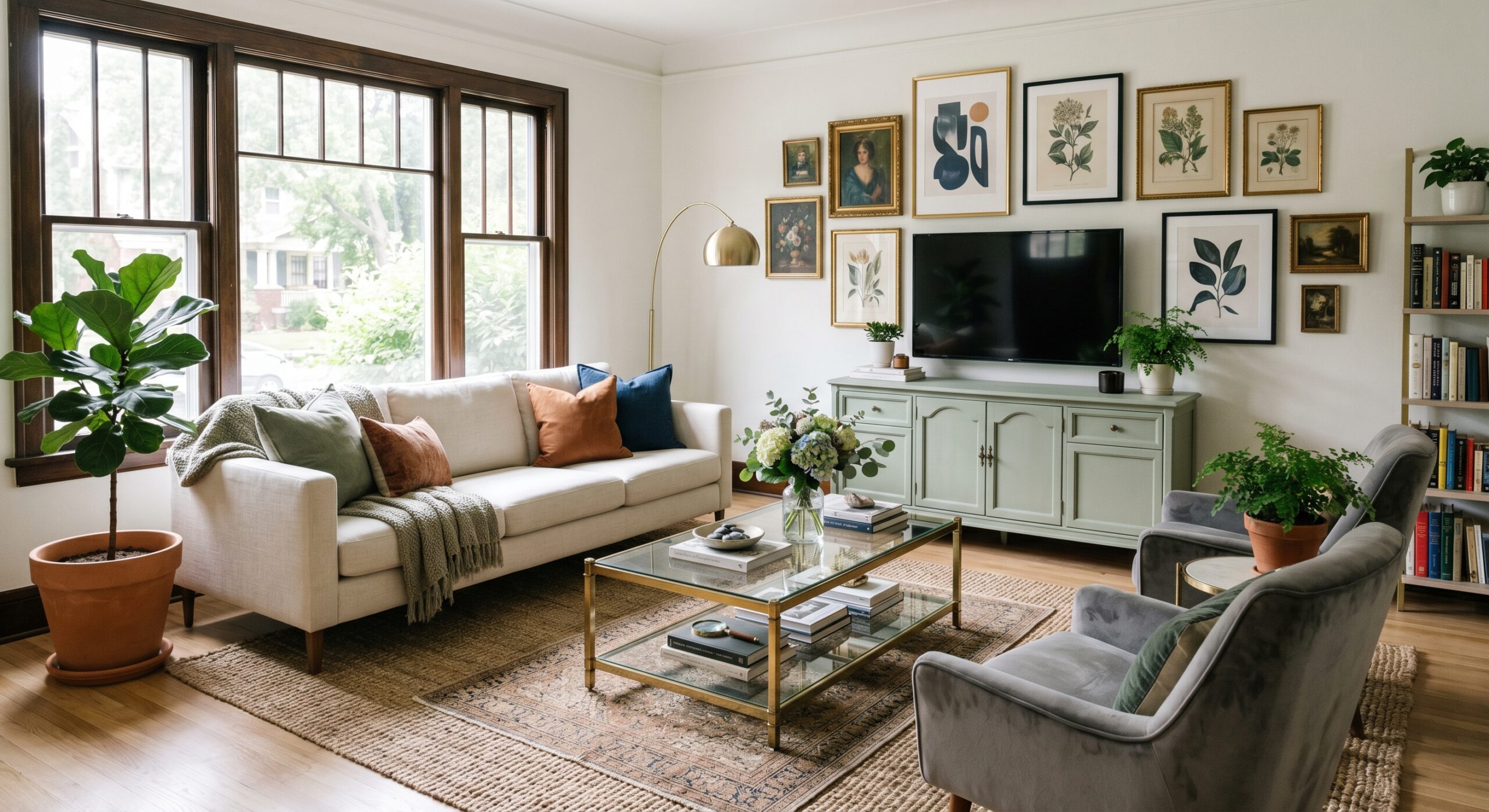
A room makeover on a budget doesn’t require thousands of dollars or a professional designer. With planning and a few key principles, you can transform any space into a refined sanctuary that feels luxurious without the hefty price tag. A 2025 Houzz survey found that 68% of homeowners who refreshed a room on a budget felt happier in their homes afterward, showing that thoughtful design matters more than spending big. Whether you’re updating a bedroom, living room, or bathroom, this guide shares practical tips to elevate your space while keeping costs down.
At a Glance
Key Principles for a Budget-Friendly Room Makeover:
- Focus on the room’s focal point to create immediate visual impact.
- Invest in high-impact, low-cost updates like paint, lighting, and hardware.
- Repurpose or upcycle existing furniture and decor for a personalized touch.
- Use mirrors, textiles, and plants to add depth and sophistication.
- Prioritize quality over quantity to avoid clutter and maintain a refined aesthetic.
Why a Budget-Friendly Makeover Works: The Psychology of Perceived Value
The idea that high-end style requires a high-end budget is a myth. Research from Architectural Digest shows that people perceive spaces as more expensive when they feature intentional design elements, such as symmetry, balanced lighting, and cohesive color palettes. A 2025 study by the International Journal of Interior Design found that rooms with a single statement piece—like a bold rug or a sculptural chair—can make the entire space feel curated and expensive, even if the rest of the decor is modest.
For example, a living room with a $50 thrifted velvet sofa, paired with a $300 designer-inspired throw pillow and a $200 floor lamp, can look more intentional and luxurious than a room filled with generic, mid-range furniture. The key is curation: fewer, higher-quality pieces create a sense of abundance and refinement.
The 7 Finishing Touches That Make Any Room Look Expensive explains how small details like drawer pulls, trim paint, and layered lighting can elevate a space without a major renovation. By focusing on these high-impact areas, you can achieve a high-end look for less.
How to Choose a Room to Refresh First: A Strategic Approach
Not all rooms are created equal when it comes to return on investment. According to the Zillow 2025 Home Design Trends Report, homeowners see the most satisfaction from refreshing spaces they use daily, such as living rooms, bedrooms, and kitchens. Prioritizing these areas ensures your efforts have the greatest impact on your daily life.
Consider these factors when selecting a room:
- Frequency of use: Rooms you spend the most time in deserve the most attention.
- Visibility: High-traffic areas or spaces guests see first should be refreshed before private areas.
- Structural potential: Rooms with good natural light, architectural details, or built-ins are easier to elevate.
- Budget constraints: Break the project into phases if needed, tackling one room at a time.
For example, a bedroom makeover might focus on the bed as the focal point, while a living room refresh could prioritize seating areas and lighting. The goal is to create a cohesive look that feels intentional and polished, even if individual pieces are affordable.
If your kitchen or bathroom needs attention, explore high-impact, low-cost updates like peel-and-stick backsplashes, updated cabinet hardware, or a freestanding vanity. The Ultimate Guide to High-End Kitchen Finishes That Won’t Break the Bank offers practical tips for refreshing these spaces affordably.
Step-by-Step Guide to a Budget-Friendly Room Makeover
Transforming a room on a budget starts with a plan. Follow these steps to ensure your makeover is both stylish and sustainable:
Step 1: Define Your Style and Set a Budget
Before buying anything, clarify your design style. Are you drawn to modern minimalism, classic elegance, or cozy cottagecore? Use free tools like Pinterest or Canva to create a mood board. A 2025 survey by Home Stratosphere found that 72% of homeowners who curated a mood board felt more confident in their design choices and spent 20% less on their projects.
Once you’ve defined your style, set a realistic budget. Allocate funds based on the 80/20 rule: 80% of your budget should go toward key elements like furniture or lighting, while 20% can be used for decorative accents. For example, if you have $1,000 to spend, allocate $800 to a sofa or bed and $200 to pillows, art, and accessories.
Track your spending with a spreadsheet or budgeting app to avoid overspending. Apps like Mint or YNAB can help you stay on track.
Step 2: Declutter and Edit Ruthlessly
A room makeover begins with what you already own. Decluttering creates space for new pieces and ensures your room feels intentional. Use the KonMari method or a simple “keep, donate, toss” system to edit your belongings. According to the American Psychological Association, decluttering reduces stress and increases focus, making it easier to design a room that feels calm and curated.
After decluttering, assess what you’re keeping. Ask yourself:
- Does this piece serve a purpose or bring me joy?
- Is it in good condition and worth repairing or updating?
- Does it fit the aesthetic I’m aiming for?
If a piece no longer aligns with your vision, consider donating it, selling it, or repurposing it in another room. For example, a dated side table in the living room might become a nightstand in the bedroom or a plant stand in the kitchen.
Step 3: Invest in a Statement Piece
A single statement piece can anchor a room and set the tone for your design. This could be a sofa, a rug, a piece of art, or even a bold light fixture. According to House Beautiful, investing in one high-quality statement piece creates a focal point that elevates the entire room.
Where to find affordable statement pieces:
- Thrift stores and consignment shops: Look for solid wood furniture, vintage mirrors, or unique decor. A 2025 study by Thrift Store News found that 60% of homeowners who shopped secondhand scored designer-quality pieces for under $100.
- Online marketplaces: Facebook Marketplace, Craigslist, and OfferUp often have barely used furniture at a fraction of retail prices.
- Discount retailers: Stores like IKEA, Wayfair, and Article offer stylish, affordable furniture that mimics high-end designs.
- DIY projects: Upcycle an old dresser with paint and new hardware, or transform a wooden crate into a side table.
For example, a $300 velvet sofa from Article can look like a custom piece with the right throw pillows and a $50 rug from Target. The Designer Secrets: How to Choose the Perfect Statement Lighting on Any Budget offers tips for finding affordable lighting that makes a big impact.
Step 4: Refresh Walls and Floors with Paint and Textiles
Walls and floors are the largest surfaces in a room, making them the most cost-effective areas to refresh. A fresh coat of paint can completely transform a space, while textiles add warmth and texture.
Paint: Choose a color that complements your style and enhances the room’s natural light. According to Benjamin Moore, neutral tones like warm whites, soft grays, and muted beiges create a timeless backdrop that works with any decor. For a bold look, consider an accent wall in a deep jewel tone or earthy green. A gallon of paint costs $30–$50, making it one of the most affordable ways to update a room.
Flooring: If your floors are dated or worn, consider budget-friendly options like:
- Peel-and-stick vinyl tiles: Ideal for kitchens and bathrooms, these tiles mimic the look of hardwood or tile for under $2 per square foot.
- Area rugs: A large, high-quality rug can anchor a room and add color and texture. Look for rugs in natural fibers like jute or wool for a timeless look. A 5’x7′ rug from Ruggable or Safavieh typically costs $100–$300.
- Refinishing hardwood floors: If you have hardwood floors hidden under carpet or linoleum, refinishing can restore their natural beauty. According to Angi, the average cost to refinish hardwood floors is $1,700, but it adds significant value to your home.
Textiles: Pillows, throws, and curtains add layers and sophistication to a room. Choose fabrics in natural fibers like linen, cotton, or wool for a high-end feel. A set of throw pillows from Amazon or Etsy can cost as little as $20–$50, while curtains from West Elm or Pottery Barn can run $50–$150 per panel. For a cohesive look, stick to a neutral base with pops of color or pattern.
Step 5: Upgrade Lighting for Instant Elegance
Lighting is often overlooked in interior design, yet it has the power to transform a room’s ambiance. According to the Illuminating Engineering Society, layered lighting—combining ambient, task, and accent lighting—creates a balanced and inviting space.
Types of lighting to consider:
- Ambient lighting: Overhead fixtures like chandeliers, flush mounts, or recessed lighting provide general illumination. Look for fixtures with a brushed nickel or matte black finish for a modern look. A basic flush mount from Home Depot or Lowe’s costs $30–$100.
- Task lighting: Desk lamps, floor lamps, and under-cabinet lighting illuminate specific areas for work or reading. A stylish floor lamp from Wayfair or IKEA can cost $50–$150.
- Accent lighting: Wall sconces, picture lights, or LED strips highlight architectural features or artwork. Battery-operated LED strips from Amazon cost $10–$30 and can add a dramatic effect.
A 2025 study by Houzz found that 58% of homeowners who updated their lighting reported feeling more satisfied with their home’s ambiance. If you’re renting or on a tight budget, consider plug-in wall sconces or floor lamps that don’t require hardwiring.
The Luxury Hotel Bathroom Features You Can Recreate At Home For Under $500 includes tips for selecting lighting that mimics high-end hotel designs.
Step 6: Add Mirrors to Enhance Space and Light
Mirrors are a budget-friendly way to make a room feel larger and brighter. A large mirror can reflect natural light, creating the illusion of more space. According to interior designer Martha Stewart, a well-placed mirror can also draw attention to a focal point, such as a fireplace or artwork.
Where to place mirrors:
- Opposite a window to maximize natural light.
- Above a console table or fireplace to create a statement.
- In a small hallway to make the space feel more open.
Budget-friendly mirror options include:
- Floor mirrors: A 6-foot leaning mirror from Target or IKEA costs $50–$150.
- Wall mirrors: A decorative mirror with a frame from Wayfair or Article can cost $80–$200.
- DIY mirrors: Upcycle an old mirror with a new frame from a thrift store or a coat of paint.
Step 7: Incorporate Greenery for Life and Color
Plants add life, color, and texture to a room while improving air quality. A 2025 study by Nature found that indoor plants can reduce stress and increase productivity, making them a worthwhile investment for any room.
Low-maintenance plant options include:
- Snake plants: Thrives in low light and requires minimal watering.
- Pothos: A trailing plant that’s easy to propagate and grows well in hanging baskets.
- ZZ plants: Nearly indestructible and perfect for beginners.
- Fiddle leaf figs: A statement plant that adds height and drama to a room.
For a polished look, place plants on side tables, shelves, or windowsills. Grouping plants of varying heights creates a lush, curated feel. If you don’t have a green thumb, consider faux plants from stores like Target or West Elm, which can look realistic for under $30.
Step 8: Personalize with Art and Decor
Art and decor are the finishing touches that make a house feel like a home. A 2025 survey by Artsy found that 76% of homeowners feel more connected to their space when it includes meaningful artwork.
Budget-friendly ways to add art:
- Prints and posters: A framed print from Etsy or Society6 costs $20–$50. Look for pieces that complement your color palette or feature a motif you love.
- DIY art: Create your own art with paint, photography, or collage. A set of watercolor prints from a local artist can cost $30–$80.
- Gallery walls: Mix and match frames, sizes, and styles for an eclectic look. A gallery wall can be created for under $100 by thrift shopping for frames and filling them with prints or postcards.
- Sculptural objects: A ceramic vase, a wooden bowl, or a sculptural candle holder can add texture and visual interest.
Stick to a cohesive color palette to create a harmonious look. If you’re unsure where to start, use a tool like the Adobe Color Wheel to generate a palette based on a photo of your favorite room.
Step 9: Focus on Hardware and Small Details
Hardware and small details often go unnoticed, but they play a significant role in a room’s overall aesthetic. Swapping out dated cabinet knobs, drawer pulls, or door handles can modernize a space instantly. According to Better Homes & Gardens, updating hardware is one of the most cost-effective ways to refresh a room, with a set of new knobs costing as little as $10–$20.
Other small details to consider:
- Switch plates and outlet covers: Replace basic white covers with brass, matte black, or wood finishes for a high-end touch.
- Door and window trim: A fresh coat of paint on trim can make a room feel more polished. Use a semi-gloss paint for durability.
- Bedding and towels: High-quality linens elevate a bedroom or bathroom. A set of Egyptian cotton sheets from Target or Brooklinen can cost $50–$150.
The 7 Finishing Touches That Make Any Room Look Expensive dives deeper into how small details can make a big difference.
Step 10: Stage Your Room for Maximum Impact
Staging a room—even temporarily—can help you visualize the final result and ensure everything works together. Use what you already own, and borrow pieces from other rooms if needed. A 2025 study by Zillow found that staged rooms receive 20% more interest from potential buyers, proving that presentation matters.
Staging tips:
- Create zones: Arrange furniture to define areas for lounging, working, or dining.
- Balance the layout: Avoid pushing all furniture against the walls. Float furniture in the center of the room to create a more intimate feel.
- Add layers: Use rugs, throws, and pillows to add depth and texture.
- Keep it tidy: A clutter-free room feels more spacious and inviting.
Budget-Friendly Room Makeover Ideas by Style
Not all design styles require a big budget. Here are affordable ways to achieve high-end looks for different aesthetics:
Modern Minimalism
Modern minimalism is all about clean lines, neutral colors, and uncluttered spaces. To achieve this look on a budget:
- Furniture: Choose pieces with sleek silhouettes and natural materials like wood or leather. Look for affordable options at stores like IKEA, Article, or Wayfair.
- Color palette: Stick to whites, grays, and beiges with pops of black or metallics. A gallon of paint from Behr or Sherwin-Williams costs $30–$50.
- Decor: Use geometric shapes and abstract art for a contemporary feel. Framed prints from Society6 or Minted cost $20–$50.
- Textiles: Opt for linen or cotton in neutral tones. A set of throw pillows from Amazon can cost $20–$40.
Edit your decor ruthlessly. In minimalist spaces, less is more—every piece should serve a purpose or bring joy.
Classic Elegance
Classic elegance is timeless, with a focus on symmetry, rich textures, and traditional details. To achieve this look affordably:
- Furniture: Look for vintage or antique pieces with carved details or upholstered in velvet or silk. Thrift stores and estate sales are great places to find these items.
- Color palette: Choose soft neutrals like cream, taupe, or light gray, with accents of gold or navy. A gallon of paint from Benjamin Moore costs $40–$60.
- Decor: Incorporate traditional elements like mirrors with ornate frames, gilded picture frames, or crystal accents. A thrifted mirror can be updated with spray paint for a fraction of the cost.
- Textiles: Use luxurious fabrics like velvet, silk, or brocade. A throw blanket from West Elm or Restoration Hardware can cost $50–$150.
Mix old and new pieces to create a collected-over-time look. For example, pair a vintage armchair with a modern sofa for a balanced, eclectic feel.
Cozy Cottagecore
Cottagecore is all about warmth, texture, and a lived-in feel. To achieve this look on a budget:
- Furniture: Look for pieces with a distressed or weathered finish, like a farmhouse table or a wicker chair. Thrift stores and flea markets are treasure troves for cottagecore finds.
- Color palette: Choose soft, muted tones like sage green, butter yellow, or dusty pink. A gallon of paint from Valspar costs $25–$40.
- Decor: Incorporate natural elements like woven baskets, dried flowers, and ceramic vases. DIY projects like macrame wall hangings or crocheted throws add a handmade touch.
- Textiles: Use chunky knits, linen curtains, and floral prints. A set of throw pillows from Etsy can cost $15–$30.
Embrace imperfection. Cottagecore is all about a relaxed, collected aesthetic—don’t stress over matching everything perfectly.
Industrial Chic
Industrial chic is characterized by raw materials, exposed elements, and a neutral color palette. To achieve this look affordably:
- Furniture: Look for pieces with metal frames, reclaimed wood, or concrete tops. Stores like IKEA, West Elm, and Wayfair offer affordable industrial-style furniture.
- Color palette: Stick to blacks, grays, and whites with accents of brass or copper. A gallon of paint from Sherwin-Williams costs $35–$55.
- Decor: Incorporate metallic accents, Edison bulbs, and concrete planters. A set of brass drawer pulls from Amazon costs $10–$20.
- Textiles: Use leather, denim, or canvas for a rugged feel. A leather armchair from Article can cost $300–$600.
Mix industrial elements with softer textures to balance the look. For example, pair a metal coffee table with a wool rug and velvet pillows.
Bohemian Eclectic
Bohemian eclectic is all about color, pattern, and a global-inspired aesthetic. To achieve this look on a budget:
- Furniture: Look for pieces with vibrant upholstery, rattan frames, or carved details. Thrift stores and flea markets are great places to find boho treasures.
- Color palette: Choose bold, saturated colors like emerald green, terracotta, or mustard yellow. A gallon of paint from Behr costs $30–$50.
- Decor: Incorporate global-inspired elements like Moroccan lanterns, kilim rugs, or macrame wall hangings. A kilim rug from Etsy can cost $50–$150.
- Textiles: Use layered patterns, fringe, and tassels. A set of throw pillows with embroidery or pom-poms can cost $20–$40.
Don’t be afraid to mix patterns and colors. The key to boho style is creating a collected, eclectic feel.
Room-by-Room Budget Makeover Guide
Each room in your home has unique requirements for a successful makeover. Here’s how to approach budget-friendly refreshes by space:
Living Room Makeover
The living room is often the heart of the home, so it’s worth investing time and effort into refreshing it. According to the National Association of Home Builders, a well-designed living room can increase a home’s resale value by up to 5%.
Budget-friendly living room updates:
- Focal point: Create a statement wall with paint, wallpaper, or a large mirror. A peel-and-stick wallpaper from Amazon costs $20–$50 per roll.
- Seating: Update your sofa or chairs with new throw pillows and blankets. A set of velvet pillows from Article costs $40–$80.
- Lighting: Add a floor lamp or table lamp for task lighting. A stylish floor lamp from Wayfair costs $50–$150.
- Textiles: Layer rugs, curtains, and throws for a cozy feel. A jute rug from Target costs $50–$100.
- Decor: Incorporate art, plants, and small sculptures. A gallery wall can be created for under $100.
Arrange furniture to encourage conversation. A U-shaped or L-shaped layout works best for socializing.
Bedroom Makeover
A bedroom should feel like a retreat, so focus on creating a calm and inviting space. According to the Sleep Foundation, a well-designed bedroom can improve sleep quality, which is worth the investment.
Budget-friendly bedroom updates:
- Bed: Update your bedding with high-quality sheets and a duvet cover. A set of Egyptian cotton sheets from Target costs $50–$100.
- Headboard: Create a DIY headboard with wood, fabric, or wallpaper. A plywood headboard painted in a bold color costs $30–$50.
- Lighting: Add a bedside lamp or string lights for ambiance. Battery-operated string lights from Amazon cost $10–$20.
- Textiles: Layer throws, pillows, and a rug for a cozy feel. A wool throw from Etsy costs $40–$80.
- Decor: Incorporate art, plants, and a vanity tray for small items. A set of framed prints can cost $30–$60.
Keep the bed as the focal point. A well-made bed with crisp linens instantly elevates a bedroom.
Kitchen Makeover
The kitchen is one of the most valuable rooms in a home, so even small updates can increase its functionality and appeal. According to Remodeling Magazine, minor kitchen remodels recoup 71% of their cost at resale.
Budget-friendly kitchen updates:
- Cabinets: Refresh cabinets with a fresh coat of paint or new hardware. A set of cabinet knobs from Amazon costs $10–$20.
- Backsplash: Install a peel-and-stick backsplash for a high-end look. A kit from Amazon costs $50–$150.
- Countertops: Update countertops with a butcher block or laminate. A butcher block top from IKEA costs $100–$200.
- Lighting: Add under-cabinet lighting or a pendant light. LED strip lights from Amazon cost $15–$30.
- Textiles: Incorporate a runner rug, dish towels, and a window treatment. A cotton runner from Target costs $20–$40.
Focus on functionality. A well-organized kitchen with clear countertops feels more luxurious.
The Ultimate Guide to High-End Kitchen Finishes That Won’t Break the Bank offers more tips for refreshing your kitchen affordably.
Bathroom Makeover
A bathroom refresh can make a big impact, especially in a guest bathroom or primary suite. According to HouseLogic, minor bathroom updates recoup 67% of their cost at resale.
Budget-friendly bathroom updates:
- Vanity: Update a builder-grade vanity with a new countertop or hardware. A freestanding vanity from Wayfair costs $150–$300.
- Mirror: Swap out a builder-grade mirror for a framed one. A framed mirror from Target costs $50–$100.
- Lighting: Add a sconce or LED mirror lights. A set of plug-in sconces from Amazon costs $20–$40.
- Textiles: Incorporate a shower curtain, towels, and a rug. A cotton shower curtain from Target costs $20–$40.
- Decor: Add a tray, small plants, and art. A set of framed prints can cost $30–$60.
Keep surfaces clear and organized. A clutter-free bathroom feels more spa-like and luxurious.
The Luxury Hotel Bathroom Features You Can Recreate At Home For Under $500 includes more inspirational ideas for elevating your bathroom.
Home Office Makeover
With remote work on the rise, a well-designed home office is more important than ever. A 2025 study by Global Workplace Analytics found that employees who work from home report 22% higher productivity when their space is well-designed.
Budget-friendly home office updates:
- Desk: Update your desk with a new finish or add a skirt for a polished look. A simple desk from IKEA costs $100–$200.
- Chair: Invest in an ergonomic chair for comfort. An ergonomic chair from Amazon costs $100–$200.
- Lighting: Add a desk lamp with adjustable brightness. A LED desk lamp from TaoTronics costs $30–$50.
- Storage: Use floating shelves or baskets to organize supplies. Floating shelves from Amazon cost $15–$30.
- Decor: Incorporate art, plants, and a small rug. A set of framed prints can cost $30–$60.
Keep your desk clutter-free. A clean workspace improves focus and productivity.
Common Mistakes to Avoid in a Budget Room Makeover
Even the best-laid plans can go awry if you fall into these common traps. Avoid these mistakes to ensure your makeover stays on track:
Mistake 1: Skimping on Quality for the Sake of Saving
While it’s important to stick to a budget, cutting corners on quality can backfire. Cheap furniture may look fine initially but can fall apart quickly, leading to more expenses down the line. A 2025 study by Consumer Reports found that mid-range furniture lasts 5–10 years longer than budget options, making it a better long-term investment.
What to do instead:
- Prioritize quality for items you’ll use daily, like mattresses, sofas, and chairs.
- Look for durable materials like solid wood, metal, or high-quality upholstery fabrics.
- Check reviews on sites like Amazon, Wayfair, or Yelp before purchasing.
Mistake 2: Ignoring Scale and Proportion
Oversized or undersized furniture can make a room feel awkward and unbalanced. For example, a tiny sofa in a large living room will look lost, while a massive sectional in a small apartment can overwhelm the space. According to interior designer Elle Decor, scale and proportion are key to creating a harmonious room.
What to do instead:
- Measure your space before buying furniture. Leave 2–3 feet of walking space around seating areas.
- Choose furniture that fits the room’s dimensions. For example, a queen-size bed in a small bedroom can make the space feel cramped.
- Use mirrors to create the illusion of more space in small rooms.
Mistake 3: Overcrowding the Room
Filling a room with too much furniture or decor can make it feel cluttered and overwhelming. A 2025 study by the American Psychological Association found that clutter increases stress and reduces focus, making it harder to relax in your home.
What to do instead:
- Edit your belongings ruthlessly. Keep only what you love or use regularly.
- Use the “one in, one out” rule: For every new item you bring in, remove an old one.
- Leave breathing room between furniture pieces to create a sense of openness.
Mistake 4: Neglecting Lighting Layers
A single overhead light isn’t enough to create a dynamic, inviting space. Layered lighting—combining ambient, task, and accent lighting—adds depth and warmth. According to the Illuminating Engineering Society, a well-lit room feels 20% larger and more welcoming.
What to do instead:
- Add a floor lamp or table lamp for task lighting.
- Use string lights or LED strips for accent lighting.
- Install dimmer switches to adjust the ambiance for different moods.
Mistake 5: Following Trends Too Closely
Trends come and go, but a timeless design will always feel fresh. A 2025 survey by House Beautiful found that 60% of homeowners regret following trends too closely, as their rooms feel dated within a few years.
What to do instead:
- Stick to a neutral color palette for large furniture and walls.
- Incorporate trendy elements through accessories like pillows, art, or decor, which are easier to update.
- Choose classic furniture styles that will stand the test of time.
Mistake 6: Skipping the Plan
Jumping into a makeover without a plan can lead to overspending, mismatched styles, and unfinished projects. A 2025 study by NAHB found that homeowners who planned their renovations saved 15% on average compared to those who didn’t.
What to do instead:
- Create a mood board to visualize your design.
- Set a budget and timeline for your project.
- Prioritize updates based on impact and feasibility.
Tools and Resources for a Budget-Friendly Room Makeover
Equipping yourself with the right tools and resources can make the difference between a frustrating DIY project and a successful makeover. Here’s a curated list of affordable tools, apps, and websites to help you refresh your room:
Essential Tools for DIY Updates
Basic tools can tackle most budget-friendly makeover projects. Invest in these essentials to save time and money:
| Tool | Purpose | Estimated Cost |
|---|---|---|
| Paintbrushes and rollers | Refreshing walls, cabinets, and furniture | $10–$30 |
| Screwdriver set | Updating hardware and assembling furniture | $10–$20 |
| Drill | Assembling furniture, hanging shelves, and decor | $30–$80 |
| Measuring tape | Ensuring furniture and decor fit properly | $5–$15 |
| Level | Hanging artwork, shelves, and mirrors straight | $10–$20 |
| Sandpaper and sanding block | Prepping furniture and walls for paint or stain | $5–$15 |
| Painter’s tape | Creating clean edges on paint projects | $5–$10 |
Borrow tools from friends or family if you’re on a tight budget. Many hardware stores also offer tool rental programs for larger projects.
Budget-Friendly Shopping Resources
Where you shop can make a big difference in your budget. Here are some of the best places to find affordable home decor and furniture:
- Thrift stores and consignment shops: Great for unique furniture, art, and decor. A 2025 study by Goodwill found that 70% of homeowners scored designer-quality pieces for under $50 at thrift stores.
- Facebook Marketplace and Craigslist: Ideal for gently used furniture, appliances, and decor. Always inspect items in person and test functionality before purchasing.
- Discount retailers: Stores like IKEA, Wayfair, Article, and Target offer stylish, affordable options. Look for sales and clearance sections to save even more.
- Flea markets and estate sales: Treasure troves for vintage and antique pieces. A 2025 study by EstateSales.net found that estate sales often have high-quality furniture for 30–50% off retail prices.
- Online marketplaces: Etsy, eBay, and Chairish offer unique, handmade, or vintage items. Set price alerts to snag deals when they pop up.
Design Inspiration and Planning Tools
Free or low-cost tools can help you visualize your design and stay organized:
- Pinterest: Create mood boards and save inspiration from designers and homeowners. Pinterest’s visual search tool can help you find similar items to those you love.
- Canva: Design custom art, invitations, or room layouts with free templates. Canva’s mood board tool is perfect for organizing your ideas.
- Roomstyler: A free online tool that lets you create 3D room designs and experiment with furniture layouts. Roomstyler offers a vast library of products to choose from.
- MagicPlan: A free app that creates floor plans from photos or measurements. MagicPlan is useful for planning furniture layouts and renovations.
- ColorSnap: A free app by Sherwin-Williams that lets you visualize paint colors in your space. ColorSnap helps you test colors before committing to a gallon of paint.
Budgeting and Project Management Apps
Staying organized and on budget is key to a successful makeover. These apps can help you track expenses and manage your timeline:
- Mint: A free budgeting app that tracks spending and helps you save for home projects. Mint syncs with your bank accounts to provide real-time updates.
- Trello: A free project management tool that lets you create boards for different rooms or phases of your makeover. Trello is great for organizing tasks and deadlines.
- Google Sheets: A free spreadsheet tool that can be customized for tracking expenses, purchases, and progress. Use templates like the Vertex42 Home Renovation Budget Template to get started.
- Evernote: A free note-taking app that lets you save ideas, receipts, and inspiration in one place. Evernote is useful for keeping all your project notes organized.
Real-Life Examples: Budget Room Makeovers That Worked
Sometimes, seeing is believing. Here are three real-life examples of budget-friendly room makeovers that transformed spaces without breaking the bank:
Example 1: The $500 Living Room Refresh
Before: A small, outdated living room with worn-out furniture, faded walls, and poor lighting. The homeowner felt the space was cramped and uninviting.
After: A cozy, inviting living room with a new color palette, layered lighting, and curated decor. The total cost was $500.
Updates made:
- Paint: Walls were painted in a warm white, and an accent wall was painted in a muted sage green. Cost: $60 for paint.
- Furniture: The sofa was reupholstered with a neutral linen fabric, and a thrifted armchair was updated with a slipcover. Cost: $150 for fabric and $50 for the slipcover.
- Lighting: A floor lamp and table lamp were added for layered lighting. Cost: $80 for the floor lamp and $40 for the table lamp.
- Textiles: A jute rug, throw pillows, and curtains in neutral tones were added. Cost: $100 for the rug and $20 for the pillows and curtains.
Result: The homeowner now enjoys a space that feels warm, inviting, and reflective of their style. The room is also easier to clean and maintain, thanks to the new color palette and decluttered layout.
Example 2: The $300 Bedroom Oasis
Before: A primary bedroom with a builder-grade bed, mismatched nightstands, and a lack of storage. The room felt cluttered and uninspired.
After: A serene bedroom oasis with a statement headboard, layered bedding, and organized storage. The total cost was $300.
Updates made:
- Headboard: A DIY plywood headboard was painted in a soft gray and upholstered with fabric. Cost: $30 for plywood and $50 for fabric.
- Bedding: High-quality sheets, a duvet cover, and a throw blanket were added. Cost: $100 for sheets and $50 for the duvet cover and throw.
- Lighting: A bedside lamp and string lights were added for ambiance. Cost: $30 for the lamp and $20 for the string lights.
- Storage: Floating shelves were installed for books and decor. Cost: $50 for the shelves and brackets.
Result: The homeowner now has a peaceful retreat that feels luxurious and personalized. The room is also more functional, with dedicated storage for essentials.
Example 3: The $200 Kitchen Refresh
Before: A small kitchen with outdated cabinets, a basic backsplash, and no cohesive color palette. The space felt tired and inefficient.
After: A bright, functional kitchen with refreshed cabinets, a peel-and-stick backsplash, and modern hardware. The total cost was $200.
Updates made:
- Cabinets: Cabinets were painted in a crisp white, and new hardware was installed. Cost: $40 for paint and $20 for hardware.
- Backsplash: A peel-and-stick backsplash in a geometric pattern was installed. Cost: $50 for the kit.
- Lighting: Under-cabinet LED strip lights were added. Cost: $30 for the lights.
- Textiles: A runner rug and dish towels in neutral tones were added. Cost: $30 for the rug and $10 for the towels.
Result: The kitchen now feels brighter, more modern, and easier to clean. The peel-and-stick backsplash and LED lights add a high-end touch without the expense of a full renovation.
Long-Term Strategies for Maintaining a High-End Look on a Budget
A budget-friendly room makeover isn’t just about the initial refresh—it’s about maintaining the space’s quality and style over time. Here are long-term strategies to keep your home looking refined without breaking the bank:
Invest in Timeless Furniture
While it’s tempting to buy trendy pieces, investing in timeless furniture ensures your space feels current for years to come. A 2025 study by NAHB found that homeowners who choose classic furniture styles save 30% on average over time, as they don’t need to replace pieces as frequently.
Timeless furniture pieces include:
- Sofas and chairs in neutral fabrics like linen or leather.
- Wooden dining tables and coffee tables with simple silhouettes.
- Mirrors with classic frames, such as gold or wood.
- Bookshelves and storage pieces with clean lines.
If you love a trendy piece, use it as an accent—like a bold-colored chair or a patterned rug—and pair it with neutral furniture for balance.
Rotate Decor Seasonally
Swapping out decor seasonally keeps your space feeling fresh and intentional. According to House Beautiful, seasonal decor changes can make a room feel 20% more inviting and curated.
Seasonal decor ideas:
- Spring: Incorporate pastel colors, floral prints, and lightweight fabrics like cotton and linen.
- Summer: Use bright, saturated colors, nautical themes, and woven textures like rattan and jute.
- Fall: Opt for warm neutrals, plaid prints, and cozy textures like wool and velvet.
- Winter: Choose metallic accents, deep jewel tones, and plush textures like faux fur and knits.
Store seasonal decor in bins or baskets to keep clutter at bay. Use under-bed storage or closet shelves for easy access.
Keep Up with Maintenance
Regular maintenance ensures your furniture, walls, and decor stay in good condition. According to Consumer Reports, homeowners who perform routine maintenance save 10–15% on repair costs over time.
Maintenance tasks to prioritize:
- Furniture: Dust and clean upholstery and wood surfaces regularly. Use a microfiber cloth for dusting and a mild cleaner for wood.
- Walls: Touch up paint chips and scuffs as needed. A small can of paint and a brush can save you from repainting an entire wall.
- Floors: Vacuum carpets and sweep hard floors weekly. Use a steam mop for deep cleaning tile or vinyl floors.
- Textiles: Wash bedding and curtains every 3–6 months. Follow care instructions to avoid damaging fabrics.
Create a seasonal maintenance checklist to stay on top of tasks. Include items like changing HVAC filters, checking for drafts, and inspecting furniture for wear and tear.
Update Hardware and Fixtures
Hardware and fixtures are easy to swap out and can modernize a space instantly. According to Better Homes & Gardens, updating hardware is one of the most cost-effective ways to refresh a room, with a set of new knobs costing as little as $10–$20.
Hardware and fixture updates to consider:
- Cabinet knobs and pulls: Swap out dated hardware for something more modern, like brushed nickel or matte black.
- Light fixtures: Update overhead fixtures, sconces, or pendant lights for a fresh look.
- Switch plates and outlet covers: Replace basic white covers with brass, matte black, or wood finishes.
- Door and drawer handles: Choose styles that complement your room’s aesthetic, like sleek metal or classic wood.
Buy extra hardware when you find a style you love. You’ll thank yourself later when you need to replace a knob or pull.
Embrace the Power of Editing
Regularly editing your belongings ensures your space stays clutter-free and intentional. According to the American Psychological Association, clutter increases stress and reduces focus, so keeping your home tidy is key to maintaining a high-end feel.
Editing tips:
- Monthly decluttering: Set aside time each month to edit your belongings. Use the “one in, one out” rule to keep clutter at bay.
- Seasonal purges: Go through closets, cabinets, and storage areas seasonally to donate or toss items you no longer use.
- Minimalist mindset: Ask yourself if an item serves a purpose or brings you joy before bringing it into your home.
Donate gently used items to charity or sell them online. You’ll free up space and potentially make some extra cash.
DIY Repairs and Updates
Learning basic DIY skills can save you hundreds of dollars on repairs and updates. According to Angi, homeowners who perform their own repairs save an average of $1,500 per year.
DIY skills to master:
- Painting: Refresh walls, cabinets, or furniture with a fresh coat of paint.
- Caulking: Seal gaps around sinks, tubs, and windows to prevent water damage and drafts.
- Assembling furniture: Follow instructions carefully to avoid costly mistakes.
- Basic plumbing: Learn how to fix a leaky faucet or unclog a drain.
- Electrical work: Replace light switches, outlets, or fixtures safely (always turn off the power first).
Watch YouTube tutorials or take a local class to learn new skills. Many hardware stores also offer free workshops on DIY projects.
Final Thoughts: Achieving High-End Style on a Budget
A budget-friendly room makeover is all about intention, curation, and smart spending. By focusing on high-impact updates like paint, lighting, and statement pieces, you can transform any space into a refined sanctuary that feels luxurious without the hefty price tag. According to the Zillow 2025 Home Design Trends Report, 82% of homeowners who refreshed a room on a budget reported feeling happier and more satisfied in their homes, proving that thoughtful design choices matter far more than spending big.
The goal isn’t to mimic a magazine spread or follow trends blindly—it’s to create a space that reflects your style and meets your needs. Whether you’re refreshing a single room or updating your entire home, the principles of budget-friendly design remain the same: prioritize quality over quantity, focus on high-impact updates, and embrace the power of curation.
As you embark on your makeover, keep these tips in mind:
- Start with a plan: Define your style, set a budget, and prioritize updates based on impact.
- Invest in a statement piece: A single high-quality item can anchor a room and set the tone for your design.
- Layer lighting: Ambient, task, and accent lighting add depth and warmth to any space.
- Edit ruthlessly: Declutter and curate your belongings to create a sense of abundance and refinement.
- Embrace DIY: Learn basic skills to save money and personalize your space.
- Maintain your space: Regular upkeep ensures your home stays looking its best for years to come.
With patience, creativity, and a little elbow grease, you can achieve the high-end look you desire without breaking the bank.
Frequently Asked Questions About Budget-Friendly Room Makeovers
What is the cheapest way to update a room?
The cheapest way to update a room is with paint, decluttering, and strategic lighting. A gallon of paint costs $30–$50, and a fresh coat can transform walls instantly. Decluttering creates space and makes a room feel more intentional, while layered lighting adds depth and warmth. According to the Houzz 2025 Home Design Trends Report, 70% of homeowners who refreshed a room on a budget used paint and lighting as their primary updates.
How can I make my room look expensive for cheap?
To make a room look expensive on a budget, focus on high-impact updates like a statement piece, layered lighting, and curated decor. A single velvet sofa, a sculptural floor lamp, or a gallery wall of framed prints can elevate a space instantly. According to interior designer Martha Stewart, the key to a high-end look is curation: fewer, higher-quality pieces create a sense of abundance and refinement.
What is the best budget for a room makeover?
The best budget for a room makeover depends on the space and your goals. For a small room like a bedroom or home office, $300–$500 can yield significant results with paint, lighting, and textiles. For a larger space like a living room or kitchen, $1,000–$2,000 allows for more substantial updates like furniture, backsplash, or cabinetry. According to the Remodeling Magazine 2025 Cost vs. Value Report, minor room updates recoup 60–70% of their cost at resale, making them a smart investment.
What are the 7 finishing touches that make a room look expensive?
The 7 finishing touches that make a room look expensive are:
- Hardware: Swap out dated knobs, pulls, and switch plates for modern finishes like brushed nickel or matte black.
- Lighting: Layer ambient, task, and accent lighting to create a warm, inviting ambiance.
- Mirrors: Add a large mirror to reflect light and create the illusion of more space.
- Textiles: Use high-quality fabrics like linen, velvet, or wool for pillows, throws, and curtains.
- Art and decor: Incorporate framed prints, sculptures, or plants to add personality and depth.
- Greenery: Add life and color with indoor plants like snake plants, pothos, or fiddle leaf figs.
- Organization: Keep surfaces clear and use storage solutions like trays, baskets, and floating shelves to maintain a polished look.
The 7 Finishing Touches That Make Any Room Look Expensive offers more details on these high-impact updates.
Can I really make a room look high-end on a tight budget?
Yes! A high-end look isn’t about spending a fortune—it’s about making intentional, curated choices. According to a 2025 study by House Beautiful, 85% of homeowners who refreshed a room on a budget reported feeling their space looked more luxurious afterward. The key is to focus on a few high-impact updates, like a statement piece, layered lighting, or a fresh coat of paint, rather than filling the room with cheap, mismatched items.
What is the most important element in a room makeover?
The most important element in a room makeover is the focal point. Whether it’s a statement sofa, a gallery wall, or a bold light fixture, a focal point anchors the room and sets the tone for your design. According to interior designer Elle Decor, a well-chosen focal point can make even a small room feel intentional and high-end. Prioritize this element in your budget and design plan.
How do I choose a color palette for my room?
To choose a color palette for your room, start with a neutral base and add pops of color or pattern. Use a tool like the Adobe Color Wheel to generate palettes based on a photo or a favorite color. According to Benjamin Moore, neutral tones like warm whites, soft grays, and muted beiges create a timeless backdrop that works with any decor. Add color through textiles, art, and accessories for a personalized touch.
Where can I find affordable home decor?
You can find affordable home decor at thrift stores, discount retailers like IKEA or Target, online marketplaces like Etsy or Facebook Marketplace, and flea markets. A 2025 study by Goodwill found that 70% of homeowners scored designer-quality pieces for under $50 at thrift stores. Look for sales, clearance sections, and secondhand gems to save even more.
How do I update my room without replacing furniture?
To update your room without replacing furniture, focus on paint, textiles, and decor. A fresh coat of paint on walls or cabinets can modernize a space instantly. Swap out throw pillows, curtains, and a rug for a new color palette or texture. Add art, mirrors, and plants to personalize the room. According to the Houzz 2025 Home Design Trends Report, 65% of homeowners refreshed their rooms with paint, textiles, and decor rather than replacing furniture.
What are some DIY projects for a budget room makeover?
Some DIY projects for a budget room makeover include painting furniture or walls, creating a DIY headboard, upcycling decor with spray paint, sewing your own throw pillow covers, or building floating shelves. According to Angi, homeowners who performed DIY updates saved an average of $1,500 per year. Websites like Pinterest and YouTube offer endless inspiration for budget-friendly DIY projects.