The 7 Finishing Touches That Make Any Room Look Expensive
Seven styling and accessory finishing touches—high-and-wide drapery, warm layered lighting, a properly scaled area rug, wide-matted eye-level art, textured pillows with plump inserts, curated trays with odd-number groupings, and hidden cords—make any room look expensive without remodeling. Styling proportions and material contrast create designer polish even around everyday furniture.
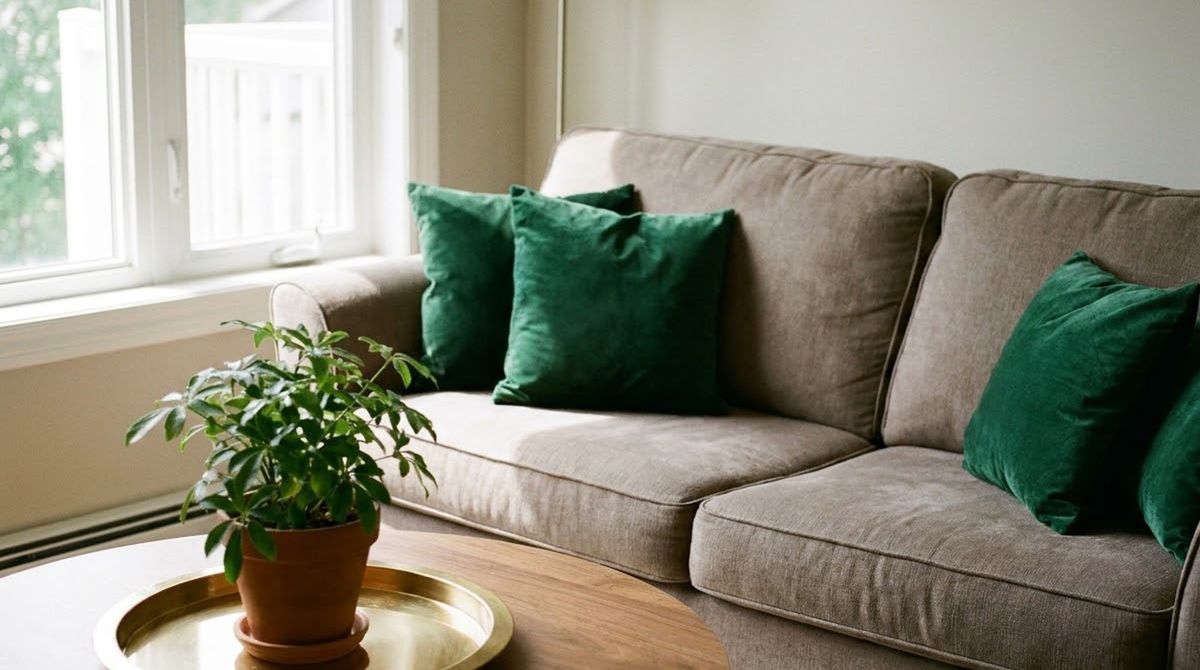
This is part of: Budget-Friendly Room Makeover: A Step-by-Step Plan for High-End Style
Accessories and styling proportions—not expensive renovations—are what give a finished room its quiet, designer polish. If you need a full plan covering paint, layout, and renovation sequencing, start with our budget-friendly room makeover pillar guide; if your walls and core furniture are already in place, these seven styling-only finishing touches elevate any living room, bedroom, or dining space in a single afternoon.
High-end interiors look effortless because every accessory has breathing room, intentional scale, and tactile contrast. Applying these seven styling rules works with furniture at any price point.
1. Hang Full-Length Drapery High and Wide
Short curtains that stop at the window sill or hug the edges of the casing chop a wall into visual boxes. Hanging floor-length linen-blend or cotton panels high and wide immediately adds architectural height and softens hard drywall corners.
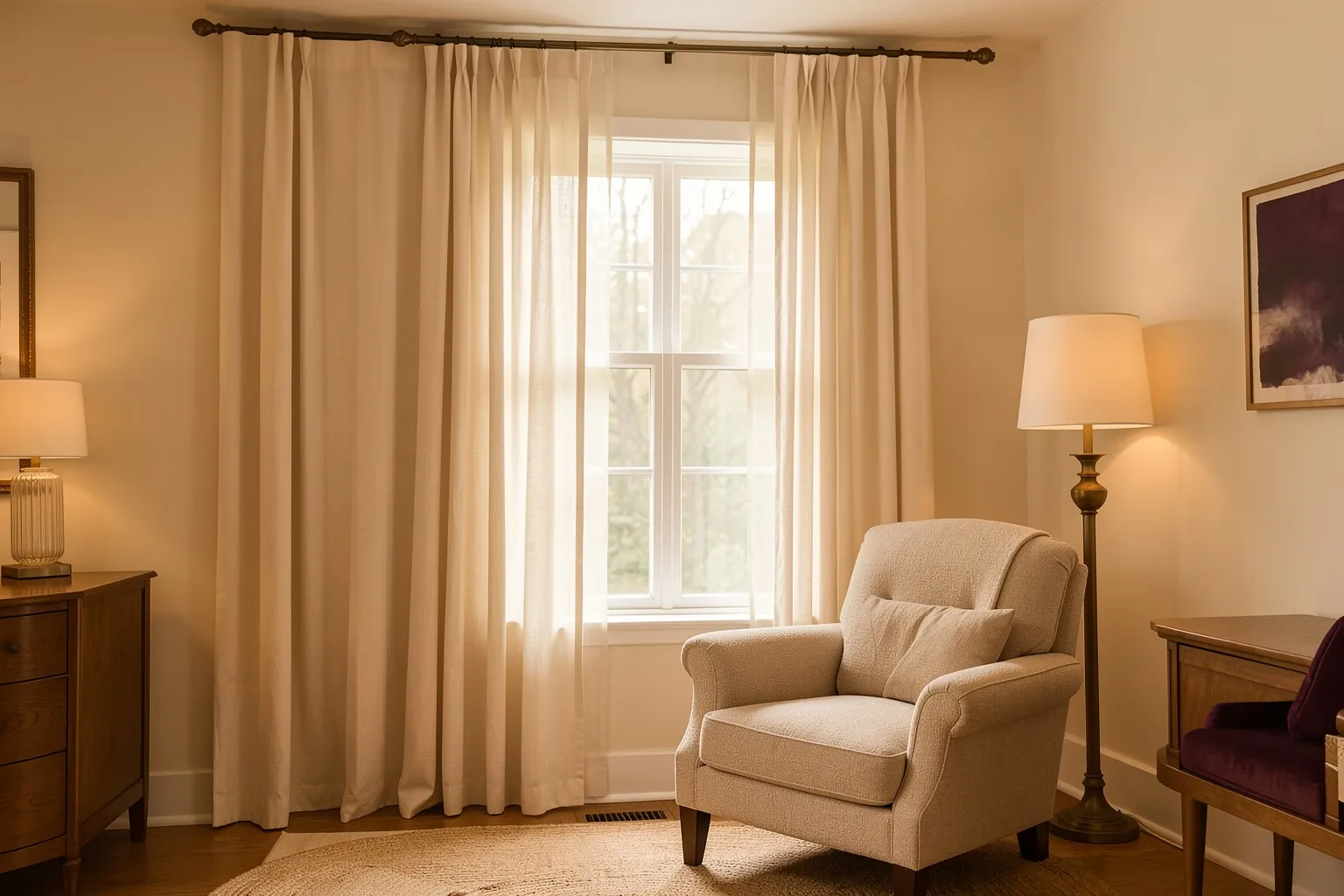
Follow three drapery placement habits for a tailored look:
- Mount high: Place rod brackets above the window trim (or right below crown molding), a common designer rule of thumb rather than a standard.
- Extend wide: Let the rod run well past the window frame on each side so open panels stack over drywall instead of blocking natural daylight.
- Kiss the floor: Choose panels long enough to lightly graze the floorboards rather than hovering two inches short.
2. Layer Warm 2700K–3000K Lamps and Sculptural Shades
Even the best sofa and rug look flat under a single overhead ceiling dome. Adding two or three warm lamps at seated eye level creates pools of inviting light and highlights textures in wood, velvet, and plaster.
Under ENERGY STAR solid-state lighting criteria, certified residential indoor LEDs are offered in 2700K, 3000K, and 3500K warm white color temperatures with a 25,000-hour rated life. Fit every table lamp, floor lamp, and sconce in the room with matching 2700K or 3000K bulbs, and swap yellowed or pleated shades for crisp linen drums. For more guidance on mixing lamps and overhead fixtures, read our statement lighting guide.
3. Anchor Seating With a Properly Scaled Area Rug
A rug that is too small—often called a “postage stamp” rug floating under a coffee table—makes an entire seating group look disconnected. Scaling up your area rug is one of the fastest ways to make standard furniture feel custom.
In a living room, choose a rug wide enough that at least the front two legs of the sofa and accent chairs sit on the rug, with the rug extending beyond the sofa’s outer arms. If a large patterned rug stretches your budget, layer a smaller woven accent rug over an affordable oversized natural jute or flatweave base.
4. Frame Large Art With Wide Mats at Eye Level
Small, unmatted prints scattered across a large wall create visual clutter. Hanging fewer, larger framed pieces—or grouping a tight gallery wall with uniform frames and generous white mats—instantly reads like a curated collection.
- Use oversized mats: Putting a modest print inside a larger frame with a wide, crisp mat gives inexpensive artwork museum-style presence.
- Hang at eye level: Center standalone art at about 57 inches from the floor (the common gallery convention for average eye level), and keep art hung over a sofa or console close enough to read as part of that group.
- Lean a mirror for depth: Placing a large round or arched mirror opposite a window bounces daylight deeper into dark corners.
5. Upgrade Throw Pillows and Blankets for Texture
Flat, polyester-stuffed pillows that came free with a sofa immediately signal “showroom package.” Swapping them for textured covers in velvet, boucle, or woven linen—and pairing them with a chunky knit or herringbone throw draped casually over one arm—adds depth without changing the sofa.
To get a plush, full look, many designers buy feather-and-down or down-alternative inserts a couple of inches larger than the pillow covers (for example, a 22-inch insert inside a 20-inch cover); this is a styling convention rather than a standard. Vary pillow sizes—such as 22-inch squares at the corners paired with an 18-inch square or lumbar pillow toward the center—rather than lining up identical pillows.
6. Style Surfaces With Trays, Odd Numbers, and Living Greenery
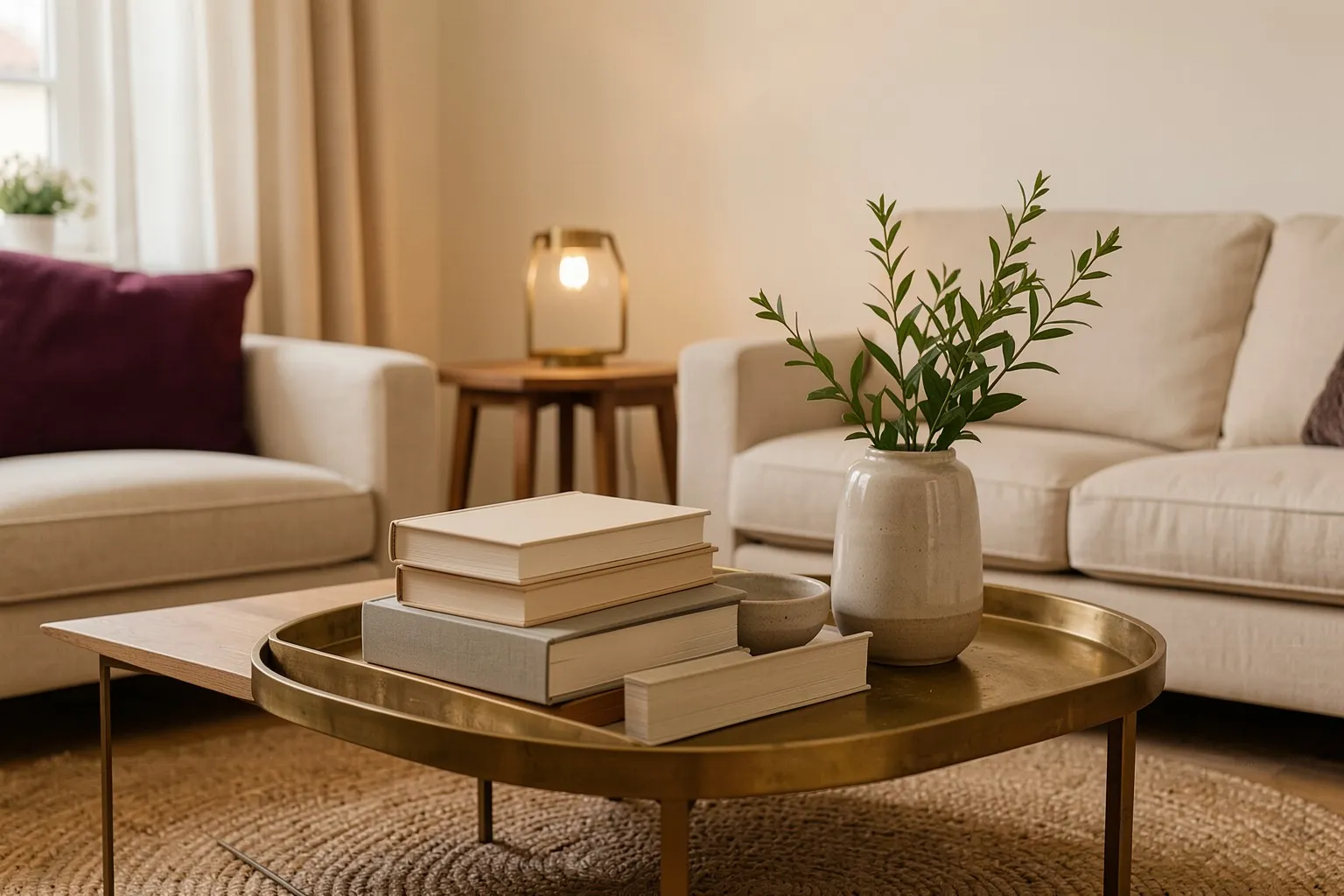
Bare coffee tables feel cold, while cluttered shelves feel chaotic. Designers bridge the gap by grouping accessories in odd numbers (typically threes) on a structured tray, varying height, shape, and finish:
- Anchor with a tray: Use a round brass, wood, or stone tray on a coffee table or ottoman to corral candles, coasters, and small objects into one intentional footprint.
- Mix heights and materials: Combine a stack of two hardcover design or photography books with a matte ceramic vase and a tapered candle holder.
- Bring in real botanicals: Fresh eucalyptus stems, white blooms, or a potted fiddle-leaf fig or olive tree add organic movement that faux plastic stems rarely match—and skipping aerosol sprays and air fresheners helps, since the U.S. EPA lists them among household VOC sources.
7. Conceal Cords and Declutter Daily Sightlines
The quietest luxury finishing touch costs almost nothing: editing out visual noise. Tuck charging cables into a drawer, run TV and lamp cords neatly down console legs with cord clips, and anchor tall media cabinets or TVs securely to the wall (following the anchor hardware instructions), as the U.S. Consumer Product Safety Commission (CPSC) advises to prevent tip-overs. Leaving negative space on shelves and tabletops lets your best pieces breathe.
How to Apply the 7 Finishing Touches by Room
While the seven styling rules stay consistent, the focal point shifts depending on how you use each room:
- Living room: Focus on rug scale (front legs of the sofa and chairs on the rug), high-and-wide drapery, two to three warm 2700K lamps, and a styled coffee-table tray with hardcover books and greenery.
- Bedroom: Let crisp, layered bedding and oversized Euro or lumbar pillows anchor the bed, hang matching eye-level art or a pair of framed prints over the headboard, and clear nightstands down to a lamp, a small dish, and one book.
- Entryway or hallway: Place a narrow runner rug along the traffic path, hang a generous mirror at eye level to bounce daylight, and group a ceramic catchall bowl with a small vase of stems on the console.
Common Styling Mistakes That Make Rooms Look Cluttered
Even good accessories miss the mark when scale or spacing is off. Watch for these four habits:
- Hanging undersized art alone on a big wall: One small 8x10 frame floating over a wide sofa looks lost; use a large framed print with a wide mat, or group a tight, evenly spaced gallery grid.
- Lining up too many small knickknacks: A shelf packed with tiny figurines reads as busy rather than curated. Swap five small trinkets for one substantial ceramic vessel, a stack of two books, and open breathing room.
- Using shiny, under-stuffed throw pillows: Thin polyester pillows flatten into limp triangles; upgrading to plump down-alternative inserts slightly larger than the covers transforms existing sofas immediately.
- Forgetting vertical balance: If every piece of decor sits below waist height, the upper half of the room feels bare. High-hung curtains, a tall floor lamp, or a potted indoor tree lifts the eye upward.
Weekend Styling Checklist: From Cluttered to Curated
You can reset a room’s finishing touches in a single afternoon without buying new furniture:
- Clear every horizontal surface: Remove remotes, coasters, stray magazines, and small decor from the coffee table, console, and bookshelves so you start with a clean slate.
- Fix lighting and cords first: Standardize 2700K or 3000K LEDs in all lamps, route cords behind console legs, and verify tall furniture is anchored.
- Adjust textiles and art height: Re-hang drapery higher and wider if needed, pull the area rug under the front sofa legs, and lower high-hung art toward eye level.
- Style back at half the volume: Place only your strongest, largest pieces back on trays and shelves—leaving deliberate empty space around every grouping.
Budget-Smart Ways to Source Finishing Touches
You can find high-impact styling pieces without paying boutique markups by knowing where scale matters most. Shop thrift stores and estate sales for solid brass trays, vintage oil paintings, and heavy ceramic vases, then invest your core styling budget in crisp linen drapery panels, an oversized neutral rug, and plump down-alternative pillow inserts that elevate even simple covers. Swapping glossy plastic frames or synthetic foliage for natural wood, stone, linen, and living greenery immediately gives any room tactile warmth that photographs and feels genuinely high-end. Repeating two or three of those natural textures—such as warm wood, woven jute, and brushed brass—across opposite sides of the room pulls the whole space together effortlessly, even when your core furniture comes from budget-friendly retailers or secondhand finds.
If you want to pair these styling touches with quick hardware or lighting swaps, see our quick, inexpensive upgrades or bring the same tray-and-linen discipline into your bath with our under-$500 hotel bathroom guide.
Frequently asked questions
What finishing touch makes the biggest difference in how expensive a room looks?
Hanging full-length drapery high and wide—and anchoring seating with an area rug large enough for front furniture legs—creates the largest shift in perceived luxury. Correcting curtain and rug proportions makes ceilings feel taller and furniture look custom-scaled without changing a single structural element.
How high should you hang curtains to make a room look taller?
A common designer rule of thumb (not a code or standard) is to mount curtain rods several inches above the window frame—or just below crown molding—and extend the rod past each side of the casing so open panels clear the glass. Choose panels long enough to lightly kiss the floor so the eye travels all the way up the wall.
What size area rug makes a living room look high-end?
Select an area rug large enough that at least the front legs of your sofa and accent chairs rest squarely on the rug, with the rug extending beyond the sofa's arms. A small floating rug in front of the coffee table visually shrinks the seating group.
How high should wall art be hung in a living room or hallway?
A widely used gallery convention is to hang standalone artwork with its visual center at about 57 inches from the floor, roughly average eye level; over a sofa or console, leave a modest gap above the furniture so the two read as one group. Hanging art too high near the ceiling disconnects it from the furniture below.
How do you style a coffee table without making it look cluttered?
Use a single structured tray—such as brass, marble, or woven wood—to corral small items, then apply the rule of thirds with varied heights: a stack of two or three hardcover books, a low ceramic vessel or candle, and a vase of fresh greenery or stems. Leaving part of the tabletop clear keeps the room feeling calm.
Source notes
- ENERGY STAR Solid-State Lighting (SSL) Criteria for Manufacturers (energystar.gov)
- CPSC Urges Fans: Anchor TVs and Furniture — U.S. CPSC (cpsc.gov)
- Volatile Organic Compounds' Impact on Indoor Air Quality — U.S. EPA (epa.gov)
- Differences Between Paint Sheens — Sherwin-Williams (sherwin-williams.com)
Related guides
- Budget-Friendly Room Makeover: A Step-by-Step Plan for High-End Style
A step-by-step budget room makeover plan covering budget splits, paint sheens, layered lighting, furniture scaling, and finishing touches.
- Cheap Ways to Upgrade Your Home: Single-Swap Luxury Looks on a Budget
High-impact, single-swap ways to upgrade your home on a small budget, from dimmers and hardware to fresh caulk, trim paint, and faucets.