High-End Kitchen Finishes That Won't Break the Bank: Material & Sheen Guide
High-end kitchen finishes depend on pairing low-glare cabinet sheens, matte or honed stone-look counters, PVD-plated metals, and consistent tile textures rather than buying the priciest slab or custom millwork. Satin or semi-gloss urethane enamel, 0.048-inch general-purpose laminate, and PVD brass or nickel hardware deliver designer depth and daily durability at a fraction of custom remodel pricing.
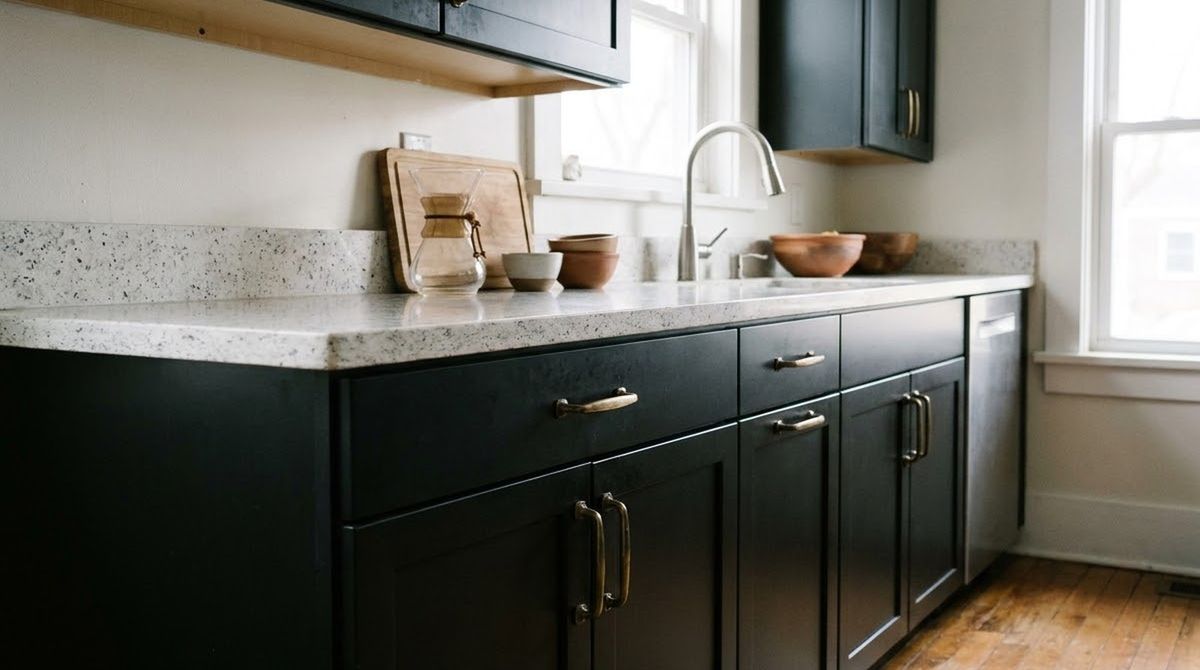
This is part of: Affordable Kitchen Upgrades That Look Expensive on a Real Budget
Selecting high-end kitchen finishes on a budget is about controlling sheen, texture, and material contrast—not buying the most expensive slab or custom millwork in the showroom. If you are still deciding which projects to tackle first, start with our affordable kitchen upgrades pillar guide for budget tiers and project order, then use this guide to pick the exact finishes that hold up and look custom.
Expensive kitchens feel calm and deliberate because glossy, satin, and matte surfaces are balanced against one another. When every surface is shiny—high-gloss cabinets, polished granite, and chrome—glare exposes every imperfection. Mixing a soft satin cabinet enamel with a honed or matte countertop, a subtle glazed ceramic tile, and a warm brushed metal finish creates depth even with entry-level materials.
Choosing the Right Cabinet Paint Sheen and Coating
Satin and semi-gloss water-based urethane enamels deliver the best combination of wipeability and low-glare depth for budget cabinet updates. Choosing the wrong sheen or wall paint is one of the fastest ways to make painted cabinetry look homemade.
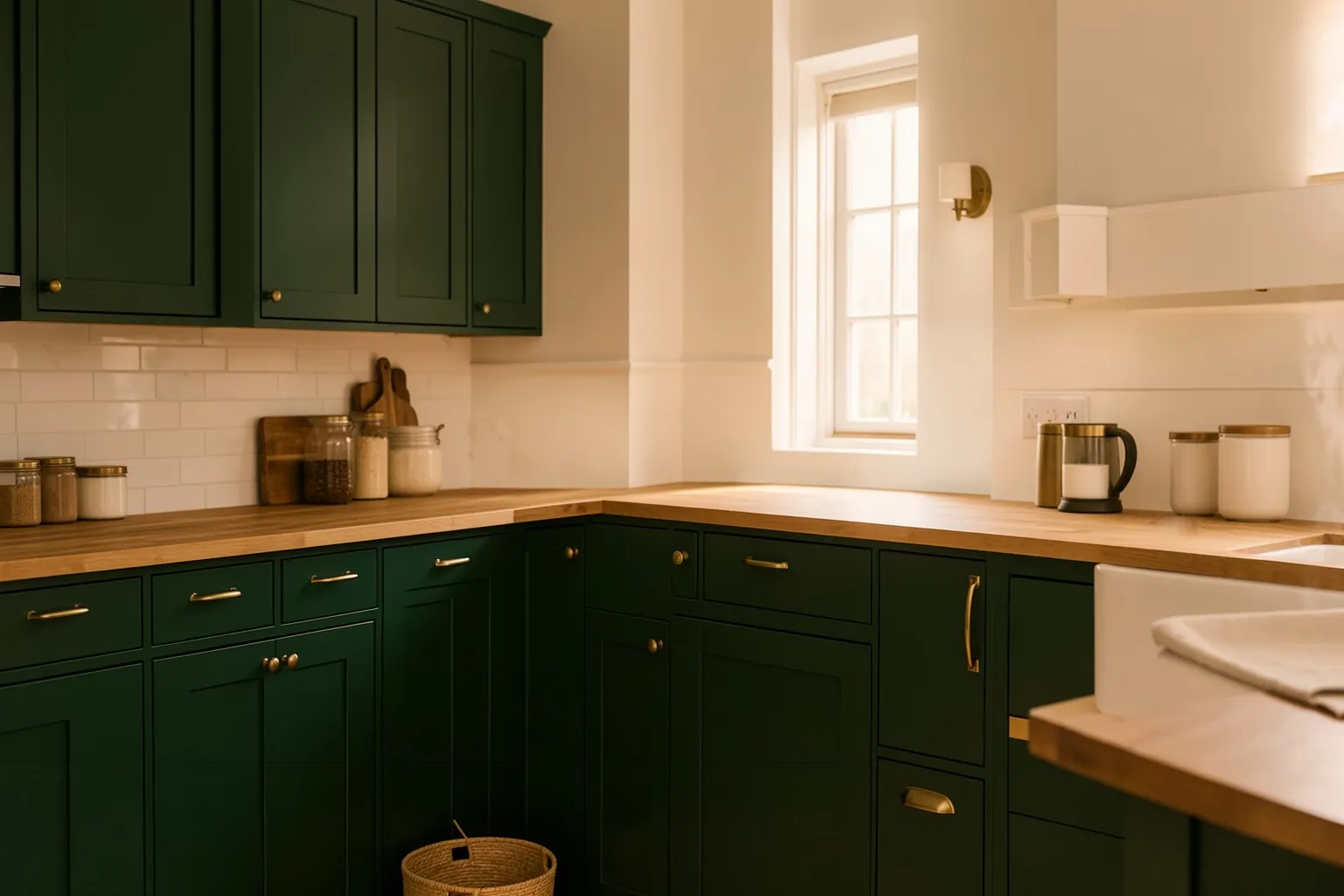
According to Sherwin-Williams’ paint sheen guide, sheen is a trade-off between binder resin and pigment: higher resin creates a smoother, harder, more stain-resistant surface, while flatter sheens scatter light to hide surface flaws.
- Satin (Best all-around choice): Offers a soft luster that resists kitchen grease and fingerprints while concealing minor wood grain or roller texture on older cabinet doors.
- Semi-Gloss (Best for dark or heavy-use kitchens): Reflects more light to brighten dim spaces and stands up to frequent scrubbing, though it will highlight dents or uneven sanding if prep is rushed.
- Flat or Matte (Avoid on cabinets): While matte walls look velvety, flat coatings lack the resin hardness needed around sinks, trash pull-outs, and stove hoods.
Whichever sheen you choose, skip standard wall latex and use a cabinet-rated urethane alkyd such as Sherwin-Williams Emerald Urethane Trim Enamel, which levels smoothly and resists yellowing over time. Pair it with proper degreasing, a bonding primer, and a 24-hour dry time before very-fine sanding as outlined in Sherwin-Williams’ cabinet-painting steps.
Countertop Finishes That Look Custom Without Stone Prices
Matte, honed, and fine-grained surfaces read as more refined than busy, high-gloss patterns, regardless of price tier. When full-slab marble or quartz is out of reach, edge profile and surface finish matter more than the brand name on the substrate.
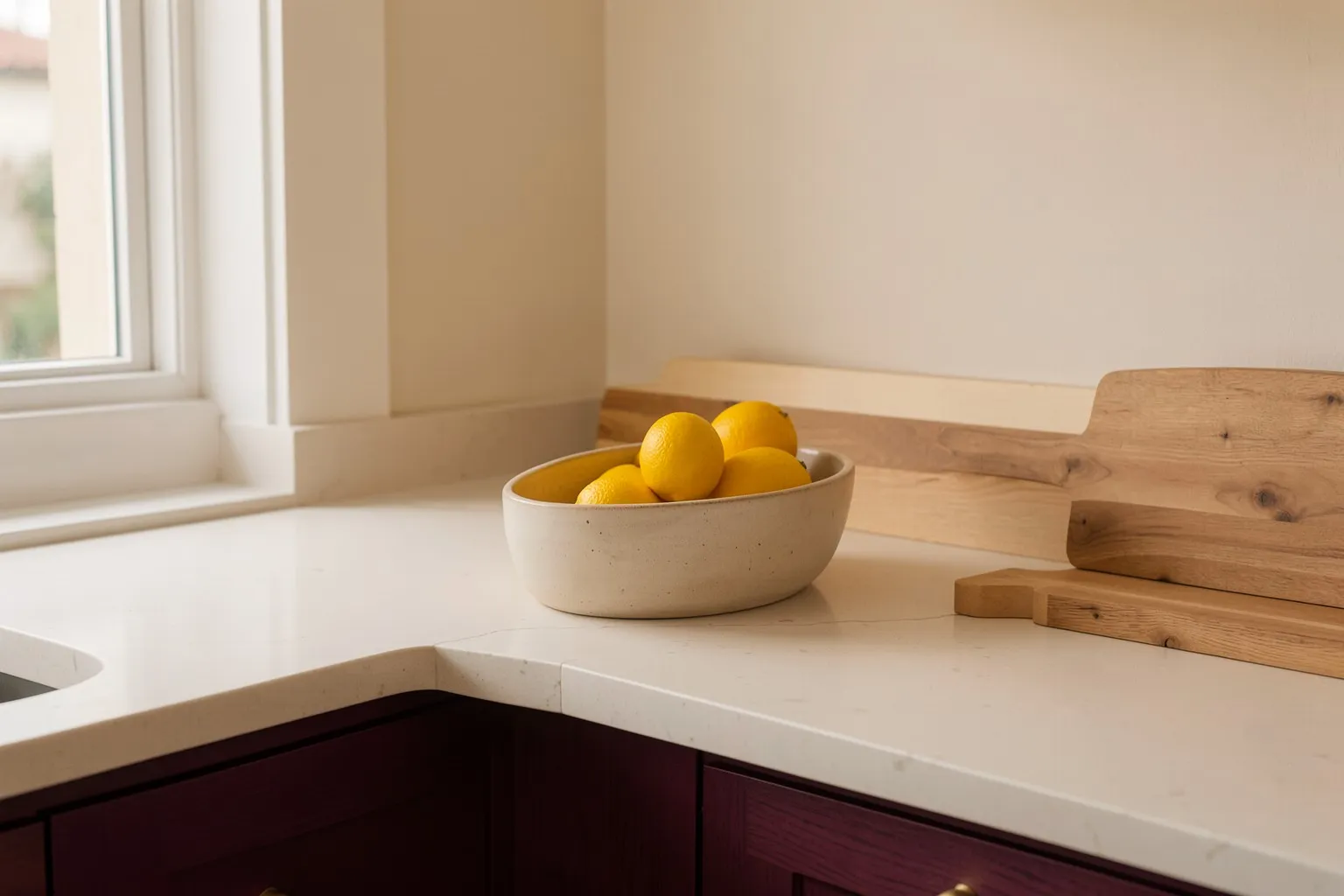
Matte High-Pressure Laminate
Modern high-pressure laminate has moved well beyond shiny, speckled 1990s counters. Manufacturers produce matte and textured stone-look sheets that mimic honed limestone or soapstone. Per Wilsonart’s laminate technical data, general-purpose grade 107 laminate is 0.048 inches thick for flat countertops with square or bevel edges, while postforming grade 350 is 0.039 inches thick for wrapped edges. Choosing a flat, square-edge profile eliminates the telltale curved bullnose seam associated with older laminate.
Sealed Butcher Block
Solid wood counters bring organic warmth to white, black, or sage painted cabinets. To keep butcher block looking crisp rather than water-stained, seal all six sides—including the underside and sink cutout—before installation, and wipe standing water around the faucet promptly.
Quartz and Natural Stone Remnants
If your kitchen has a compact island, peninsula, or coffee bar, ask local stone fabricators about leftover remnants from larger jobs. You get genuine stone or engineered quartz at a lower material cost while keeping fabrication simple. When choosing marble, granite, or quartzite, follow Natural Stone Institute care guidance by cleaning with a neutral stone cleaner or mild dish detergent and avoiding acids such as lemon or vinegar, which can dull or etch calcareous stone like marble. Sealing makes stone more stain resistant, not stain proof, and the Institute does not say it prevents etching.
Metal Finishes for Faucets, Pulls, and Lighting
Warm brushed metals and matte black hardware anchor a kitchen’s palette, and choosing durable plating prevents peeling and tarnishing on high-touch surfaces.
- PVD Brushed Brass or Brushed Nickel: Physical Vapor Deposition (PVD) is a coating process for metal fixtures. As Kohler’s Tone faucet brochure states, its PVD finishes are designed to withstand everyday use and resist scratches, corrosion, and tarnishing, which makes the finish worth looking for on faucets and pulls.
- Matte Black: Creates crisp architectural contrast against white, oak, or light-gray cabinetry. Choose powder-coated or PVD-backed black hardware rather than thin painted zinc, which chips near the keyhole or edge.
- Mixing Metals Without Clutter: Stick to one dominant metal (such as cabinet pulls and lighting) and one supporting metal (such as a stainless sink and faucet), repeating each finish at least twice so it looks planned.
For advice on coordinating lighting fixture finishes with your room’s scale, check our statement lighting guide.
Backsplash Tile, Grout, and Wall Finishes
A calm backsplash finish ties your countertops and cabinets together while protecting drywall behind the range and sink. The secret to a designer-looking tile job on a budget is grout color and layout discipline, not expensive mosaic sheets.
- Glazed Ceramic vs. Matte Porcelain: Pair matte cabinets and honed counters with a slightly reflective glazed ceramic tile to bounce warm under-cabinet light onto the prep surface. If your counters already have heavy veining or shine, choose a matte porcelain tile instead.
- Keep Grout Lines Narrow and Matched: High-contrast dark grout on white subway tile emphasizes every uneven spacer. Matching the grout closely to the tile body creates a quiet, continuous plane that feels much more expensive.
- Use Semi-Gloss or Satin on Trim, Eggshell on Walls: Keeping kitchen walls in a washable eggshell or satin finish avoids ceiling-like chalkiness while letting semi-gloss trim and baseboards pop cleanly.
Sink, Appliance, and Flooring Finish Harmony
Cabinetry and countertops get most of the attention, but your sink material, appliance fronts, and floor finish either lock the kitchen together or introduce visual friction. Coordinating these supporting surfaces keeps a budget kitchen feeling unified.
Sink Finishes: Stainless Steel vs. Composite Granite
Brushed stainless steel is a forgiving budget sink finish because it pairs easily with both chrome and warm brass faucets. Matte black or warm white composite granite sinks look sculptural against light countertops, though they require regular wiping to prevent hard-water mineral rings around the drain.
Flooring Finishes Under Kitchen Traffic
If you are replacing worn kitchen flooring on a budget, matte luxury vinyl plank (LVP) or large-format matte porcelain tile outperforms glossy sheet vinyl or high-gloss ceramic. Matte surfaces hide everyday footprints and dust far better under bright kitchen lighting. Before buying tile for a kitchen floor, look for a wet Dynamic Coefficient of Friction (DCOF) of at least 0.42, which the Ceramic Tile Education Foundation’s Scott Carothers describes as the minimum wet DCOF AcuTest value the tile standard now requires for ceramic tile in level interior spaces expected to be walked on when wet, so cooking splashes do not create a slip hazard.
Wood Tone Consistency Across Open Shelves and Accents
When pairing painted cabinets with natural wood open shelving, butcher block, or counter stools, keep wood undertones in the same temperature family. Warm white oak and walnut pair smoothly with creamy off-whites and brass, whereas cool-gray-washed woods often clash with warm gold hardware. Applying a matte clear water-based polyurethane over open shelves protects against kitchen steam without turning the wood yellow or glossy.
If the cabinets themselves are the finish problem, compare refacing, painting and replacing costs before you choose a door style.
Common Finish Mistakes That Date a Kitchen
Avoiding a few predictable finish traps saves both money and rework:
- Mixing warm and cool whites: Pairing a blue-toned bright white cabinet paint with creamy beige-veined countertops makes the counters look yellowed and the cabinets look stark. Always compare white samples side by side in your kitchen’s actual 2700K or 3000K lighting.
- Overusing high-gloss surfaces: Glossy cabinets, polished stone, and shiny subway tile bounce harsh glare off every surface; balance shine with at least one or two matte or honed textures.
- Choosing ultra-trendy hardware shapes: Oversized novelty pulls or thin lacquered gold finishes wear quickly and date the room faster than classic bar pulls, cup pulls, or PVD brushed brass.
- Ignoring indoor air quality during refinishing: Because U.S. EPA guidance notes that concentrations of many VOCs are consistently higher indoors, up to ten times higher, than outdoors, select low-VOC cabinet enamels and ventilate continuously until coatings cure.
How to Pair Kitchen Finishes Without Overdoing It
As the Journal of Light Construction’s 2025 Cost vs. Value analysis highlights, overly specific custom selections can narrow a home’s appeal while driving up costs. A restrained, timeless finish palette works better both for daily living and future resale.
Use this simple pairing formula before ordering samples:
- Pick one hero contrast: Either dark lower cabinets with a light counter, or light cabinets with warm wood accents and dark hardware.
- Test samples in kitchen lighting: Prop cabinet paint boards, tile, and countertop samples vertically and horizontally under your actual 2700K or 3000K kitchen bulbs—overhead showroom fluorescents distort warm undertones.
- Repeat textures across the room: Echo wood open shelving with a wood cutting board or counter stools, and repeat your pendant’s metal finish on drawer pulls.
Once you have locked in your kitchen materials, you can apply the same finish-pairing discipline to opulent guest bathroom finishes or tackle quick single-swap home upgrades in adjacent living spaces.
| Material | Visual Finish | Maintenance & Care | Best Budget Use |
|---|---|---|---|
| Matte High-Pressure Laminate | Low-glare stone or solid matte | Wipe with mild soap; use trivets and cutting boards | Full kitchen runs where stone exceeds budget |
| Sealed Butcher Block | Warm natural wood grain | Seal all six sides; oil regularly and dry sink seams | Islands, prep zones, or contrasting perimeter runs |
| Quartz Remnant | Consistent veined or solid stone | Non-porous; avoid high heat and harsh abrasives | Small islands, coffee bars, or compact galley kitchens |
| Natural Marble / Granite | Unique natural veining | Neutral stone cleaner; avoid acids; sealing aids stain resistance | Dedicated baking zones or small remnant tops |
Choose matte high-pressure laminate for large perimeter runs when keeping costs tight, and save stone remnants or sealed butcher block for an island focal point.
Frequently asked questions
What paint sheen looks most expensive on kitchen cabinets?
Satin is the most versatile cabinet sheen for a high-end look because it offers a soft, low-luster glow that cleans easily without highlighting every brush stroke or wood-grain flaw. Semi-gloss adds more durability and light reflection in darker kitchens, while flat or matte finishes show grease and scuffs too quickly on working cabinet doors.
How do I keep budget laminate countertops from looking cheap?
Choose a matte, honed, or subtle stone-look laminate rather than high-gloss faux granite, and pair it with a square or tight-radius edge profile instead of a bulky rounded bullnose. Ordering a flat slab edge with an undermount-style or crisp drop-in sink and matching backsplash caulk eliminates the visual giveaways of older laminate counters.
Are PVD brass and matte black finishes worth it on a budget?
Yes, PVD (Physical Vapor Deposition) finishes are worth prioritizing on faucets and high-touch pulls because manufacturers such as Kohler state that their PVD finishes resist scratches, corrosion, and tarnishing. Choosing PVD brushed brass or brushed nickel for the faucet and pairing it with solid-metal pulls keeps the kitchen looking new without premature peeling.
Should kitchen hardware match the faucet finish?
Your cabinet hardware does not have to match your faucet identically, as long as you limit the kitchen to two intentional finishes and repeat each one at least twice. For example, pair a stainless or brushed-nickel faucet with matte black cabinet pulls and black pendant canopies, or match brushed brass pulls with a warm brass faucet.
What backsplash finish pairs best with matte cabinets?
A satin or glossy ceramic tile backsplash creates subtle contrast against matte or satin painted cabinets, bouncing warm task light across the counter. Keeping the tile shape classic—such as a 3x6 or 2x8 subway—and matching the grout color closely to the tile gives the wall a calm, architectural look.
Source notes
- Differences Between Paint Sheens — Sherwin-Williams (sherwin-williams.com)
- Emerald Urethane Trim Enamel Product Details — Sherwin-Williams (sherwin-williams.com)
- How To Paint Your Kitchen Cabinets in 5 Easy Steps — Sherwin-Williams (sherwin-williams.com)
- Wilsonart Basic Laminate Technical Data (wilsonart.com)
- Care & Cleaning of Natural Stone — Natural Stone Institute (naturalstoneinstitute.org)
- Volatile Organic Compounds' Impact on Indoor Air Quality — U.S. EPA (epa.gov)
- Tile Letter — DCOF Rating Requirements for Interior and Exterior Tile (tileletter.com)
- Kohler Tone Bathroom Faucet Brochure (PVD Finishes) (resources.kohler.com)
- 2025 Cost vs. Value Report: Key Trends — Journal of Light Construction (jlconline.com)
Related guides
- Affordable Kitchen Upgrades That Look Expensive on a Real Budget
Practical, high-impact kitchen upgrades that look expensive without a full gut remodel, covering cabinets, lighting, hardware, and ROI.
- Cabinet Refacing vs Painting vs Replacing: What Each Costs
What cabinet refacing, painting and replacing cost per linear foot in 2026, when each one works, and a free estimator to price your kitchen.